
The Fast Way to Fix a Flooded Basement in Apex (And Prevent It From Happening Again)
A flooded basement in Apex strikes without warning. Water rises from failed sump pumps or seeps through clay-heavy soil. Every minute counts when your finished basement holds thousands of dollars in furniture, electronics, and irreplaceable keepsakes. The fast way to fix it means calling a local team that understands Apex’s specific drainage challenges and can extract water, dry structures, and prevent mold within hours.
The first 24 hours determine whether you save your basement or face costly demolition. This guide shows you exactly what happens during professional cleanup, why Apex basements flood so often, and how to stop it from happening again. We’ll cover the emergency response timeline, the science of structural drying, and the hidden dangers lurking in standing water.. Read more about Professional Sewage Backup Cleanup for Homeowners in North Hills.
Why Apex Basements Flood So Often
Apex sits on dense Carolina red clay that absorbs water slowly and expands when wet. This soil presses against foundation walls during heavy rains, forcing water through even tiny cracks. The town’s rapid suburban growth has increased impermeable surfaces like driveways and roofs, sending more runoff toward older homes with aging drainage systems.
Many Apex neighborhoods developed in the 1990s and early 2000s used standard sump pump installations that now struggle with today’s heavier rainfall patterns. A typical 1,500-square-foot roof sheds over 900 gallons of water during a one-inch rainstorm. Without proper grading and functional French drains, that water finds its way into basements.
Emergency Response: What Happens in the First Hour
When you call for help, a certified technician arrives within 60 minutes with industrial-grade extraction equipment. The first step involves assessing water category using IICRC S500 standards. Clean water from a broken supply line poses different risks than contaminated water from sewage backup or stormwater intrusion.
Technicians wear personal protective equipment including respirators and waterproof boots when dealing with Category 2 or 3 water. They immediately shut off electrical power to affected areas and begin water extraction using submersible pumps capable of removing thousands of gallons per hour.
The extraction process follows a specific pattern. Technicians start at the lowest point where water pools deepest, then work toward higher areas. They use moisture meters to detect hidden water behind walls and under flooring before visible signs appear.
Water Extraction Equipment and Techniques
Professional water extraction requires specialized equipment that homeowners cannot rent at local hardware stores. Truck-mounted extraction units provide superior suction power compared to portable units. These machines can pull water from carpet padding and subfloors that seem dry to the touch.
For finished basements with drywall, technicians use injectidry systems that force air through small holes drilled behind baseboards. This technique dries wall cavities without removing entire drywall sections. The process can save thousands in reconstruction costs.
Hardwood floors require different treatment. Water trapped beneath planks causes warping and cupping. Technicians use floor drying mats connected to dehumidifiers that create negative pressure, pulling moisture up through the wood grain.
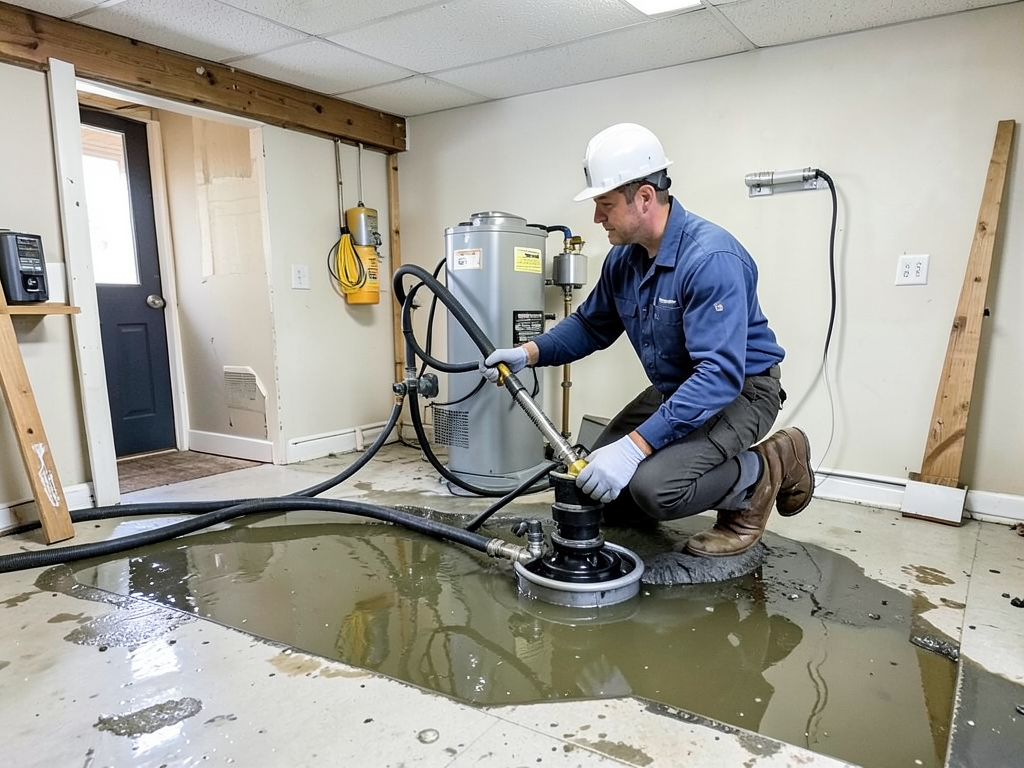
Diagram showing water extraction equipment setup with truck-mounted unit, submersible pumps, and drying mats connected to a flooded basement floor plan.
The Science of Structural Drying
Drying a flooded basement involves controlling temperature, humidity, and air movement. Psychrometry, the study of moist air properties, guides every drying decision. The goal is creating conditions where water evaporates from materials faster than it can be absorbed from the air.. Read more about The Honest Guide to Sump Pump Failure Cleanup in Morrisville.
Industrial dehumidifiers remove 20 to 30 gallons of water per day from the air. Air movers create circulation that prevents moisture from settling on surfaces. Technicians place equipment strategically based on moisture readings from infrared cameras and penetrating moisture meters.
Temperature affects drying speed significantly. Warmer air holds more moisture, accelerating evaporation. However, excessive heat can damage certain materials. Technicians maintain optimal temperatures between 70 and 90 degrees Fahrenheit during the drying process.
Hidden Dangers in Flooded Basements
Standing water creates perfect conditions for mold growth within 24 to 48 hours. Mold spores exist everywhere but need moisture, organic material, and temperatures between 40 and 100 degrees to multiply rapidly. A flooded basement provides all three conditions.
Category 3 water, also called black water, contains harmful bacteria and pathogens. This includes sewage, stormwater mixed with street contaminants, and water that has been standing for more than 48 hours. Exposure can cause serious illness.
Electrical hazards multiply when water contacts wiring, outlets, or appliances. Even after water recedes, moisture in electrical boxes creates shock risks. Gas appliances with pilot lights can leak if water damages control valves.
Preventing Future Basement Floods
Preventing basement floods requires addressing multiple failure points. Start with the sump pump system. A primary sump pump handles normal water flow, while a battery backup pump activates during power outages. Many Apex homes lack backup systems, leaving them vulnerable during summer thunderstorms.
Install a water alarm that sounds when water reaches critical levels in the sump pit. These devices provide early warning before flooding begins. Some smart systems send alerts to your phone when water is detected.
Grading around your foundation should slope away at a rate of six inches per ten feet. This simple fix directs water away from basement walls. Clean gutters and extend downspouts at least five feet from the foundation.
Foundation and Drainage Solutions
Foundation cracks wider than 1/8 inch allow significant water intrusion. Epoxy injection seals these cracks permanently. For active leaks, technicians apply hydraulic cement that expands as it cures, creating a watertight seal.
French drains collect subsurface water before it reaches your basement. These systems consist of perforated pipes surrounded by gravel, installed below the basement floor level. Water flows into the pipes and gets directed to the sump pump.
Window wells collect rainwater and direct it toward basement windows. Install clear covers that prevent debris accumulation while allowing light to enter. Ensure window well drains remain unclogged.
Insurance and Documentation
Most homeowner insurance policies cover sudden water damage from burst pipes or appliance failures. However, groundwater flooding and sewer backup typically require separate endorsements. Review your policy before disaster strikes. EPA mold information.
Document everything when flooding occurs. Take photos and videos before cleanup begins. Keep receipts for emergency services and temporary repairs. This documentation supports insurance claims and helps establish the scope of damage.
Professional restoration companies often handle insurance billing directly. They document damage using industry-standard software that creates detailed estimates acceptable to insurance adjusters.
Cost Factors for Basement Flood Cleanup
Cleanup costs vary based on water category, affected area size, and materials involved. Clean water from a broken pipe costs less to remediate than contaminated stormwater. Hardwood floors and custom cabinetry increase restoration expenses significantly.
Category 1 water damage in a 500-square-foot area typically costs $1,500 to $4,000 to extract and dry. Category 2 or 3 water in the same space can cost $3,000 to $7,000 due to contamination risks and material removal requirements.
Insurance deductibles usually range from $500 to $2,500. Some policies include separate deductibles for wind or hurricane damage, which affects flood cleanup costs after storms.
When to Call for Professional Help
Call immediately if water covers more than 10 square feet, if you suspect contaminated water, or if electrical systems might be affected. Professional help becomes essential when water has been standing for more than 24 hours or when you notice musty odors.
DIY cleanup works for small spills under 10 square feet of clean water. However, without proper equipment, you cannot detect hidden moisture that leads to mold growth. The cost of professional inspection often saves thousands in future remediation.
Health concerns justify immediate professional response. Anyone with respiratory issues, compromised immune systems, or young children should avoid exposure to floodwater and mold spores.
Local Building Codes and Requirements
Wake County requires permits for basement finishing work, including waterproofing installations. The North Carolina Residential Code mandates specific requirements for sump pump discharge, including proper drainage away from foundations and compliance with local utility regulations.
Electrical work in wet areas must follow National Electrical Code Article 406 requirements for ground-fault circuit interrupters. This protects against shock hazards in basements and crawl spaces. National Association of Certified Home Inspectors.
Local ordinances in Apex regulate stormwater management, particularly for new construction. These rules affect drainage system design and discharge locations for sump pumps.
Frequently Asked Questions
How long does basement flood cleanup take?
Water extraction takes 4 to 8 hours for most basements. Complete drying requires 3 to 5 days with professional equipment. Category 3 water situations may require additional sanitation time.
Can I stay in my home during cleanup?
You can usually remain in upper floors if the basement is the only affected area. However, Category 2 or 3 water situations require temporary relocation due to contamination risks.
Will my insurance cover basement flooding?
Coverage depends on the water source. Sudden pipe breaks are typically covered, while groundwater flooding requires separate flood insurance. Review your policy or contact your agent for specifics.
How can I prevent mold after a flood?
Complete drying within 24 to 48 hours prevents most mold growth. Professional dehumidification and air circulation systems achieve this faster than household fans. Monitor humidity levels and address any remaining moisture promptly.
Take Action Before the Next Storm
Flooded basements create stress, health risks, and expensive repairs. The fast way to fix a flooded basement in Apex means calling professionals who understand local soil conditions, building codes, and rapid response requirements. Don’t wait until water rises to your ankles.
Pick up the phone and call (984) 294-5900 before the next storm hits. Our certified technicians arrive within 60 minutes with industrial-grade equipment to extract water, dry structures, and prevent mold growth. We handle insurance documentation and get your basement back to normal faster than DIY methods ever could.
Prevention costs less than emergency response. Schedule a basement inspection today to identify vulnerabilities before they become disasters. Your peace of mind is worth a phone call.