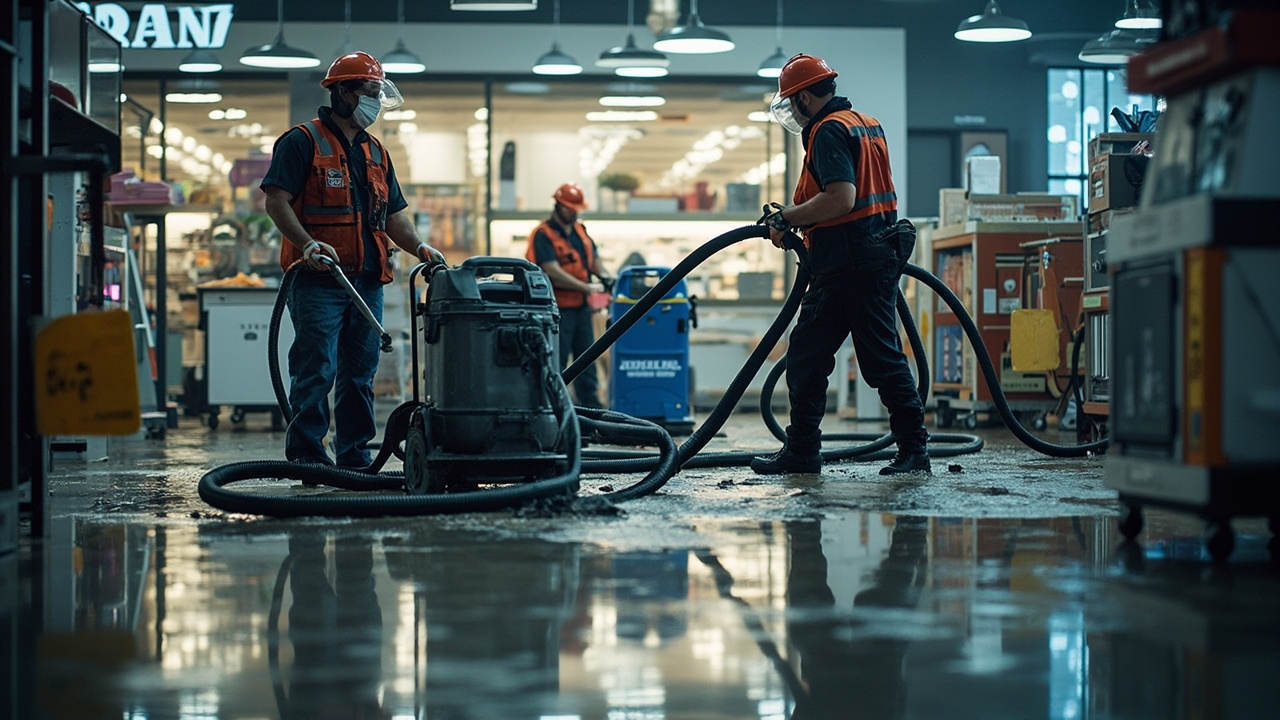
Raleigh's commercial retail stock includes numerous properties built before modern stormwater management standards. Crabtree Valley Mall and surrounding retail centers experienced significant flooding during Hurricane Florence in 2018, exposing vulnerabilities in aging drainage systems and flat roof designs. Street-level storefronts in downtown Raleigh sit below grade relative to adjacent streets, creating natural collection points for stormwater runoff during heavy rainfall. The city's red clay soil has low permeability, causing surface water to pool rather than drain, which increases hydrostatic pressure on foundation walls and below-grade stockrooms. Retail spaces in converted historic buildings along Glenwood Avenue and Hillsborough Street often have outdated plumbing and lack backwater valves, making them susceptible to sewer backups during storm events.
Retail water damage restoration in Raleigh requires knowledge of local building codes and lease obligations specific to Wake County. Commercial property owners must comply with the North Carolina Building Code, which mandates specific drying timelines and mold remediation protocols to prevent health hazards. Many retail leases in Raleigh include clauses requiring tenants to report water damage within 24 to 48 hours and complete repairs within a defined period to avoid default. Working with a local contractor who understands these requirements protects your lease status and ensures compliance with municipal inspection standards. We provide documentation that satisfies both landlord notification requirements and insurance claim substantiation, reducing your administrative burden and legal exposure.