
How to Use a Moisture Meter to Check for Hidden Water in Your Walls
Finding water inside your walls can feel like searching for a ghost. You know something is wrong because of the musty smell or the slight warping of your baseboards but you cannot see the source. A moisture meter turns that invisible problem into hard data. This guide walks you through the process step by step using tools and standards that professional restoration teams rely on every day in Raleigh. How to Choose the Best Water Restoration Company in Cary Without Getting Ripped Off.
Moisture meters measure the amount of water inside building materials. They give you a number that tells you whether a wall is dry enough to be safe or wet enough to need immediate attention. In Raleigh’s humid climate those numbers can be tricky to interpret so understanding the tool and the conditions is just as important as taking the reading. Who to Call for Emergency Water Damage in Downtown Raleigh at 3 AM.
Understanding Your Tools: Pin-Type vs. Pinless Meters
Two main types of meters exist and each has a specific job. Pin-type meters use two sharp probes that you push into the material. They measure electrical resistance between the pins and give a direct reading of moisture content. These work best for wood and drywall because they reach the actual fibers where water hides. Water Damage Restoration Cary.
Pinless meters use electromagnetic sensors to scan beneath the surface without leaving holes. They work faster over large areas and are ideal for finished walls where you do not want to damage the paint or wallpaper. The trade-off is that they read a wider area but with less precision at depth.. Read more about Why Water Travels Up Your Walls (The Physics of Capillary Action in Raleigh Homes).
Choosing the right tool depends on your situation. If you suspect a slow leak behind a painted wall a pinless meter can quickly map the wet zone. If you need to confirm moisture in a stud cavity a pin-type meter gives you the exact reading where it matters most.
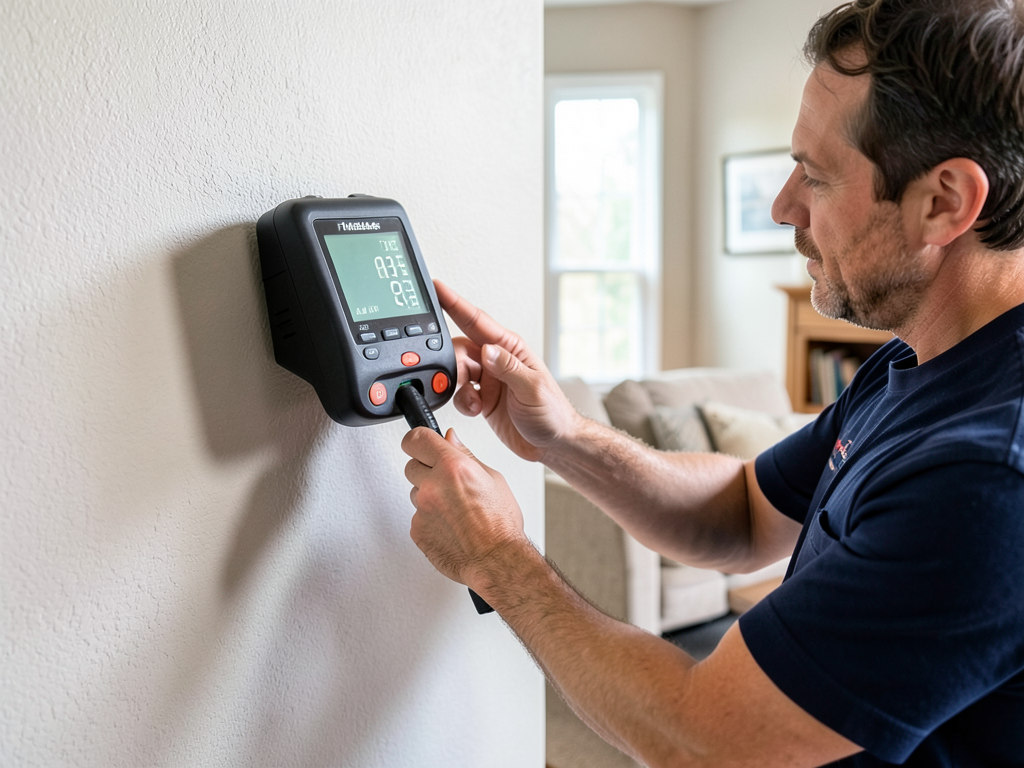
Step-by-Step Instructions for Accurate Readings
Start with a fully charged meter and the correct mode selected. Most meters have settings for wood and for non-wood materials like drywall or masonry. Using the wrong setting can give you readings that are off by ten percent or more.
Step one is to establish a dry standard. Find an unaffected area of the same material in your home. For example if you are testing a bedroom wall check the opposite corner where no water has touched. This gives you a baseline number that represents normal moisture for your home.
Step two is to scan the suspect area. With a pinless meter move it slowly in a grid pattern. Watch for spikes in the display. With a pin-type meter press the pins into the material at one-inch intervals following the same grid.
Step three is to document the readings. Write down the numbers and the exact locations. Patterns matter more than single readings. A random high number might be a sensor glitch but a line of high readings often traces the path of a leak.
Step four is to check again in twenty-four hours if the numbers are high. Moisture levels can rise and fall with the weather especially in Raleigh where summer humidity can push indoor levels into the sixties.
Interpreting the Results: What Do the Numbers Mean?
Moisture content is expressed in two ways. Wood moisture equivalent WME shows the percentage of water by weight in the material. Relative scale numbers from one to one hundred show how wet the material is compared to its maximum capacity.
For most interior walls a WME below twelve percent is considered dry. Between twelve and sixteen percent means the material is damp but not yet at risk for mold. Above sixteen percent means conditions are right for mold to grow within forty-eight hours according to IICRC S500 standards. IICRC S500 standards.
Pinless meters often use a relative scale where twenty to thirty is normal for drywall in a humid climate. Readings above fifty suggest a hidden moisture source. The key is to compare suspect readings to your dry standard not to a generic chart.
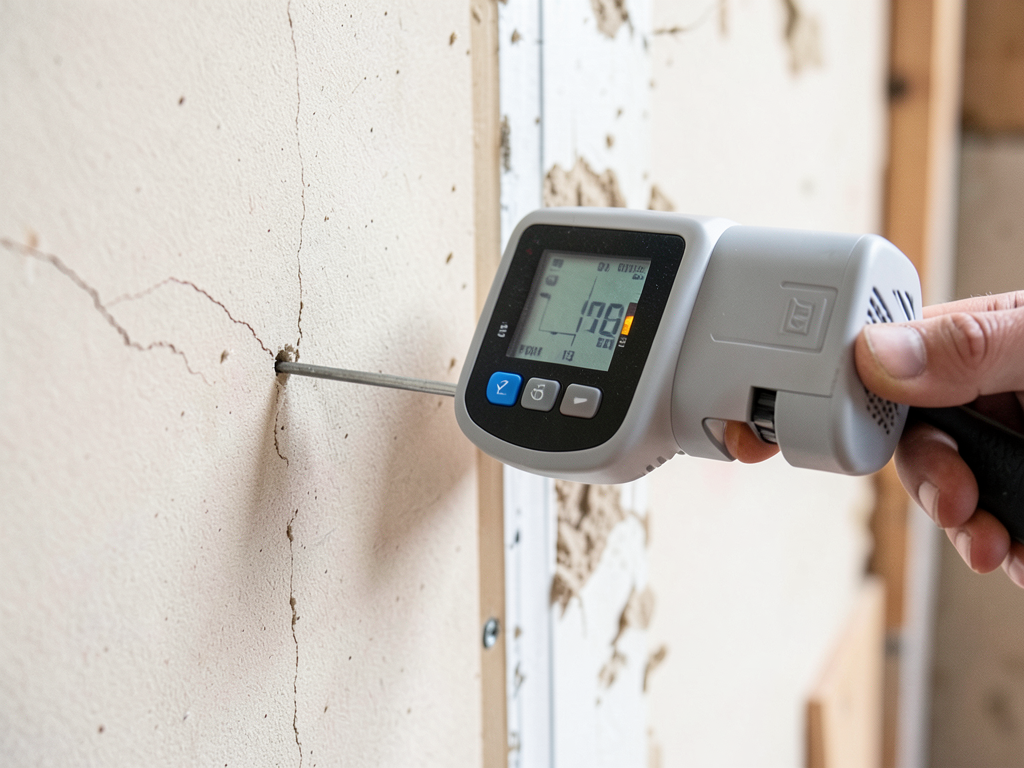
Raleigh Humidity Factors: Why Your Readings Might Be High
Raleigh sits in a humid subtropical climate zone. Summer air can hold more than sixty percent relative humidity for months at a time. That moisture seeps into porous materials and can make a wall that is structurally sound appear wet on a meter.
Indoor humidity also rises when air conditioning fails or when crawl space vents are blocked. A reading of twenty-five percent on a pinless meter might be normal for your home in August but alarming in January when indoor air is drier.
Foundation type matters too. Many older homes near Five Points have crawl spaces with dirt floors that release moisture into the framing. Newer slab homes in Brier Creek can still have plumbing leaks under the concrete that push moisture up into the walls. What to Do When Your Brier Creek Office Floods Over the Weekend.
North Carolina Residential Code requires vapor barriers in crawl spaces to reduce this effect but barriers degrade over time. If your home is more than ten years old and has never had the crawl space inspected that could explain consistently high readings.
Beyond the Meter: When to Call a Water Damage Professional
A moisture meter is a snapshot not a diagnosis. It tells you where water is but not why it is there or how deep it has spread. That is where professional training and equipment come in.
Call a professional if your readings stay above twenty percent for more than a day or if you see mold spots stains or peeling paint. Those are signs that water has been present long enough to cause damage.
Also call if the readings form a pattern that follows a plumbing line or a roof edge. That pattern often means a leak is active and getting worse. Professionals use thermal imaging to see temperature differences behind walls and hygrometers to measure airborne moisture that a handheld meter cannot detect.. Read more about Why Brick Porosity Can Lead to Damp Walls in Your Sunnybrook Home.
Another red flag is if the material feels soft or crumbles when touched. That indicates rot and requires immediate structural assessment. In these cases the meter is only the first step in a larger investigation.
Silver Lining Water Damage Restoration serves Raleigh Cary and Wake Forest with twenty-four seven emergency response. Our technicians are IICRC certified and trained to interpret moisture data in the context of local building science. If you are unsure about your readings call (984) 294-5900 for a professional inspection before the problem spreads. Local Experts for Mold Remediation and Water Damage in Five Points.
Frequently Asked Questions
Can I use a moisture meter on painted walls?
Yes but the paint can slightly shield the sensor. For pinless meters hold the device flat and apply firm pressure. For pin-type meters you will need to make a small hole to reach the drywall beneath.
How deep can a moisture meter read?
Pinless meters typically scan up to one and a half inches deep. Pin-type meters read only as deep as the pins are inserted usually between half an inch and one inch depending on the model.
Will a moisture meter find mold?
No. A moisture meter detects water only. Mold can grow when moisture is present but the meter does not identify spores or colonies. If you see visible mold you need a different test.
Should I turn off my HVAC before testing?
It is best to test with the home at its normal living condition. Turning off HVAC can change indoor humidity and give you a reading that does not reflect the true state of the materials.
How often should I check for moisture?
If you have had a past leak or live in an older home with a crawl space check once a year. After any storm or plumbing incident check immediately and again in twenty-four hours.
If your meter readings are high and you are not sure what they mean call (984) 294-5900 today to schedule your inspection. Waiting can turn a small damp spot into a major repair. Pick up the phone and call (984) 294-5900 before the next storm hits. EPA mold guidelines.
You may also find this helpful. Why Your Umstead Attic Is Dripping Even When It Is Not Raining.
You may also find this helpful. Why Your Fridge Ice Maker Is Leaking Behind the Wall in Your Meredith Woods Kitchen.