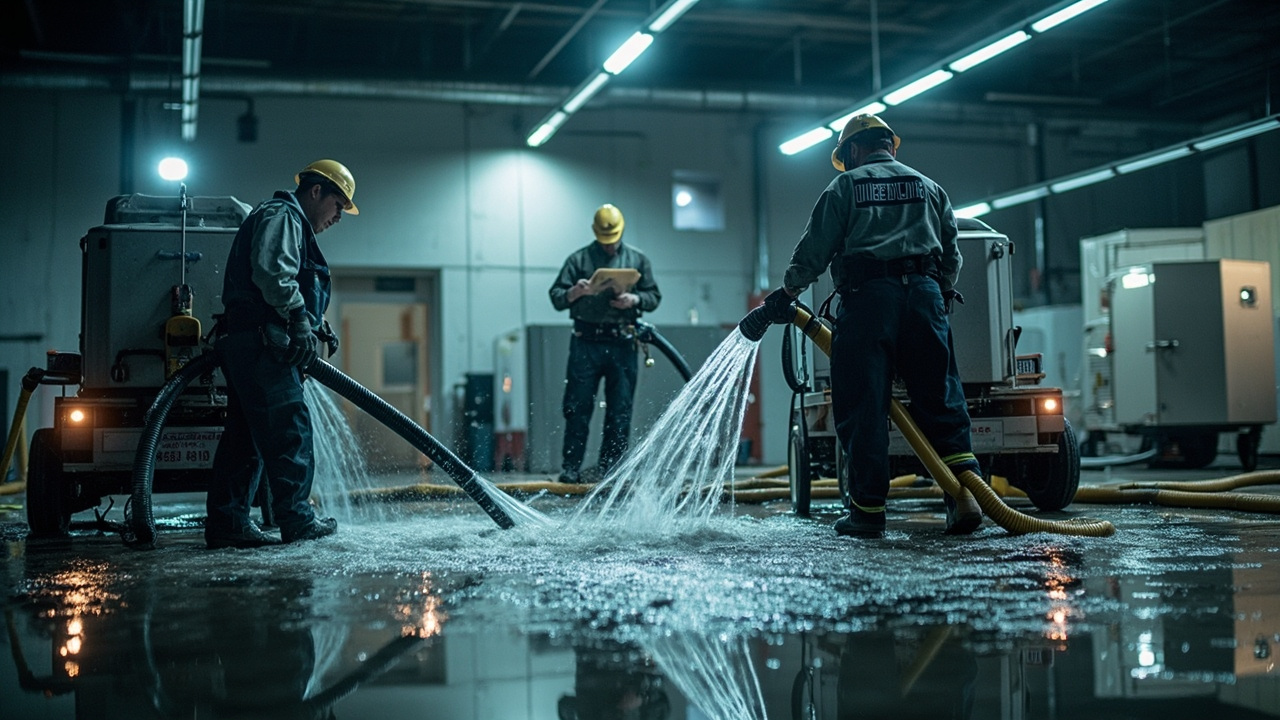

Raleigh receives an average of 46 inches of rainfall annually, with intense summer thunderstorms and occasional tropical weather systems from the Atlantic. These events overwhelm aging stormwater infrastructure in older commercial districts near downtown and cause rapid flooding in low-lying areas. Many industrial facilities built in the 1980s and 1990s near Crabtree Creek or Walnut Creek have inadequate drainage systems for current storm intensities. When heavy rain combines with clogged roof drains or failed sump pumps, you can see catastrophic flooding in minutes.
Raleigh's commercial building stock includes everything from mid-century warehouses with flat roofs prone to ponding to newer LEED-certified office buildings with complex mechanical systems. Local building codes require specific water intrusion barriers and drainage for below-grade spaces, but older buildings were grandfathered under less stringent standards. Choosing a water damage restoration vendor familiar with these local construction variations and Wake County permitting processes ensures compliance and prevents delays. We work regularly with local engineers and inspectors, which speeds approvals when structural drying affects fire-rated assemblies or requires temporary electrical work.