
Why Your Fridge Ice Maker Is Leaking Behind the Wall in Your Meredith Woods Kitchen
Water pooling under your fridge is not just a minor nuisance. In Meredith Woods homes built in the 2000s, a slow ice maker line leak can saturate the subfloor before you notice visible damage. The combination of Raleigh’s year-round humidity and the slow drip from a cracked plastic supply tube creates perfect conditions for mold growth within 24-48 hours behind your kitchen cabinets. How to Choose the Best Water Restoration Company in Cary Without Getting Ripped Off.
Immediate Steps to Stop the Leak
- Locate the Shut-Off Valve
Most Meredith Woods homes have the cold water shut-off valve inside the cabinet next to the fridge. Turn it clockwise until it stops. If you cannot find it, trace the 1/4-inch plastic supply line to where it connects to the home’s main water line. Who to Call for Emergency Water Damage in Downtown Raleigh at 3 AM.
- Disconnect the Supply Line
Using an adjustable wrench, loosen the compression fitting at the fridge. Place a towel underneath to catch residual water. If the line is kinked or shows cracks, replace it immediately with a reinforced braided stainless steel line. Water Damage Restoration Cary.
- Remove Standing Water
Extract visible water with towels or a wet vacuum. Do not rely on air drying; Raleigh’s average 70% relative humidity means moisture will linger in wood and LVP flooring for days without professional equipment. High Indoor Humidity Levels.
Common Causes of Ice Maker Line Failures
Plastic tubing becomes brittle over time, especially in homes with hard Wake County water. Mineral deposits from Raleigh’s municipal supply can create microscopic cracks that expand under pressure. The saddle valve used in many older installations is another failure point; its piercing mechanism can corrode and leak slowly for months before detection.
Warning Signs You Might Miss
- Damp spots appearing on the opposite side of the kitchen wall
- A musty odor near the fridge that intensifies when the door is closed
- LVP flooring showing slight warping at the edges
- Increased condensation on the fridge exterior during humid months
The Hidden Damage Behind Your Cabinets
When water seeps into the wall cavity, it travels along the path of least resistance. In Meredith Woods’ slab-on-grade construction, that often means water wicks into the drywall, saturates the baseplate, and pools under the flooring. Within 48 hours, mold spores can colonize the paper backing of drywall and the underside of your cabinets.
The North Carolina Residential Code requires moisture barriers in certain applications, but a slow ice maker leak bypasses these protections. By the time you see bubbling paint or soft drywall, the damage extends several feet beyond the visible area. North Carolina Department of Insurance.
Why Raleigh’s Climate Makes It Worse
Raleigh’s average relative humidity of 70% means drying times for structural materials are 2-3 times longer than in arid climates. According to the IICRC S500 Standard for Professional Water Damage Restoration, Class 2 water damage (significant water absorption in materials) requires professional dehumidification to prevent secondary damage.
Without industrial-grade dehumidifiers running for 72+ hours, moisture remains trapped in the subfloor and wall cavities. This creates an environment where mold can grow even after the visible water is gone.
Hardwood vs. LVP: Different Risks, Same Problem
| Flooring Type | Water Response | Restoration Challenge |
|---|---|---|
| Engineered Hardwood | Cupping within 24-48 hours | May require sanding and refinishing; severe cases need replacement |
| LVP (Luxury Vinyl Plank) | Water seeps through seams | Traps moisture underneath, creating hidden mold colonies |
| Tile with grout | Minimal surface absorption | Water travels through grout lines to subfloor |
Insurance Coverage: Sudden vs. Gradual Damage
North Carolina homeowners insurance typically covers sudden and accidental water discharge, but not gradual leaks. An ice maker line that has been leaking for months may be classified as neglect, leaving you responsible for repairs. Document the damage with photos and moisture meter readings immediately after discovery to strengthen your claim. EPA Mold Information.
The North Carolina Department of Insurance recommends keeping records of all maintenance and repairs. If you can prove the leak was sudden (e.g., you heard a pop or saw water gushing), your claim is more likely to be approved.
Professional Structural Drying vs. DIY Fans
Placing household fans on wet flooring is insufficient for Meredith Woods’ construction. Professional water mitigation involves:
- Moisture mapping with thermal imaging cameras to locate hidden saturation
- Removing baseboards and toe kicks to access wall cavities
- Using axial air movers to create high-velocity airflow across wet surfaces
- Deploying desiccant or refrigerant dehumidifiers to reduce ambient humidity
Without these steps, moisture remains in the structure, leading to warping, delamination, and mold growth that can cost thousands more to remediate later.
Diagnostic Tools We Use on Every Job
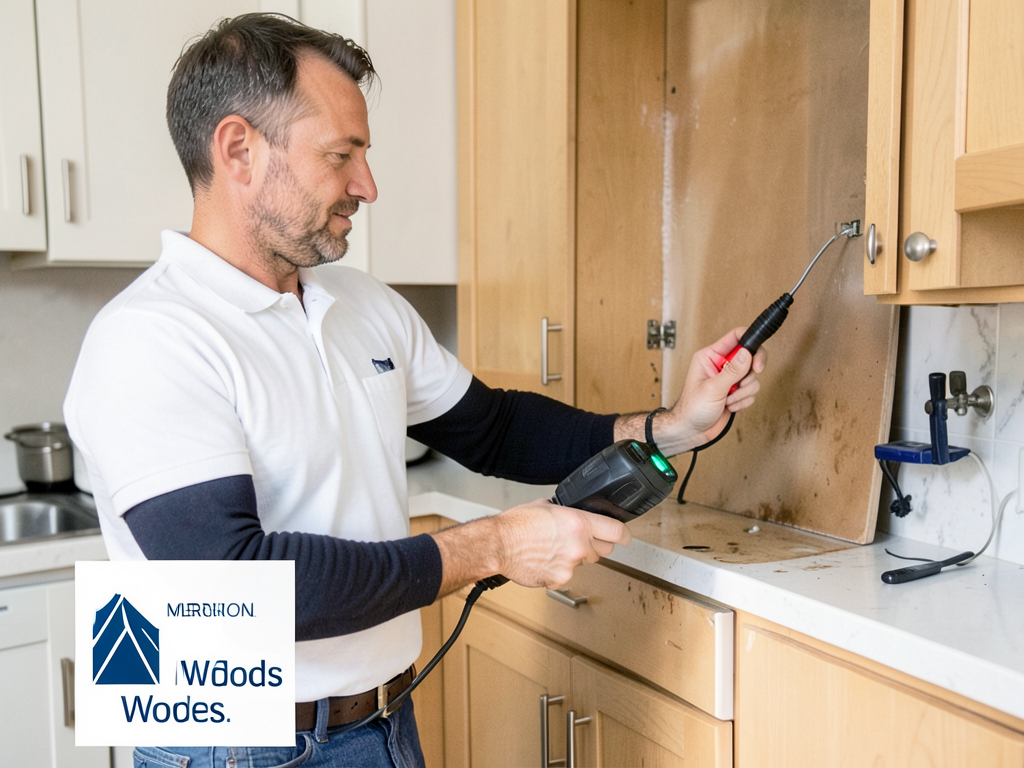
Our technicians use moisture meters with probes that measure water content at different depths in wood and drywall. We also employ hygrometers to track relative humidity changes throughout the drying process. This data proves to insurance companies that the structure has returned to pre-loss conditions.
Thermal imaging cameras reveal temperature differences that indicate moisture presence behind walls. This non-invasive testing prevents unnecessary demolition while ensuring we find every affected area.
Preventing Future Ice Maker Leaks
- Replace plastic supply lines every 5-7 years with braided stainless steel
- Install a water alarm sensor behind the fridge
- Check the saddle valve annually for corrosion or mineral buildup
- Consider a whole-house water leak detection system
Why Choose Local Raleigh Experts
Silver Lining Water Damage Restoration understands Meredith Woods’ specific construction patterns and Raleigh’s climate challenges. Our team responds within 60 minutes, uses IICRC-certified technicians, and works directly with your insurance company to streamline the claims process.
We’ve restored hundreds of homes in the Triangle area, including many in the 27613 and 27615 zip codes where Meredith Woods is located. Our familiarity with local building codes and insurance practices means faster, more effective restoration. Local Experts for Mold Remediation and Water Damage in Five Points.
Don’t Wait Until It’s Too Late
Water damage from a slow ice maker leak can cost $3,000-$8,000 to repair if caught early, but can exceed $15,000 if mold develops and structural elements need replacement. The longer you wait, the more extensive and expensive the damage becomes.
Call (984) 294-5900 today to schedule your inspection. Our team will assess the damage, create a restoration plan, and help you navigate the insurance process. Don’t let a small leak turn into a major disaster.
Frequently Asked Questions
How long does it take for mold to grow after a water leak?
According to the IICRC S500 Standard, mold can begin growing within 24-48 hours in conditions with temperatures between 77-86°F and relative humidity above 60%. Raleigh’s climate often meets these conditions year-round.
Can I dry water damage myself with fans and dehumidifiers?
DIY drying often fails to remove moisture from wall cavities, subfloors, and other hidden areas. Professional equipment and moisture monitoring are necessary to ensure complete drying and prevent secondary damage.
Will my homeowners insurance cover ice maker line damage?
Coverage depends on whether the damage is classified as sudden and accidental or gradual. Document the damage immediately and contact your insurance company to determine coverage specifics for your policy.
How can I tell if water has damaged my subfloor?
Signs include soft spots when walking on the floor, visible warping or buckling of flooring, and musty odors. A moisture meter reading above 15% in wood subflooring indicates significant water damage requiring professional attention.
What should I do if I find mold behind my cabinets?
Do not disturb the area, as this can release mold spores throughout your home. Seal off the area if possible and contact a certified mold remediation specialist immediately. Mold remediation requires specific containment and removal procedures to ensure safety.