
Why Your Umstead Attic Is Dripping Even When It Is Not Raining
Water dripping from your attic ceiling on a dry Raleigh afternoon is not always a roof leak. In many Umstead homes the culprit is attic condensation a hidden moisture problem that builds up when warm humid air meets cold attic surfaces. The good news is that condensation is a fixable indoor air quality issue. The bad news is that if ignored it can lead to mold growth and wood rot just like a true roof leak. This guide explains how to tell the difference and what steps to take before the problem spreads. How to Choose the Best Water Restoration Company in Cary Without Getting Ripped Off.
Quick Comparison: Condensation vs Roof Leak
| Timing | Condensation | Roof Leak |
|---|---|---|
| When it appears | During cold snaps or after temperature swings | During or right after rain |
| Location of moisture | Widespread across ceiling or near vents | Localized around chimneys skylights or roof valleys |
| Appearance | Water droplets or frost on surfaces | Stains or active drips from one spot |
| Weather outside | Can happen on dry days | Only when it rains |
How Condensation Forms in Your Attic
Condensation happens when warm moist air from your living space rises into the cooler attic and hits surfaces below the dew point temperature. In Umstead’s humid climate indoor air can hold a lot of moisture from showers cooking laundry and even breathing. When that air contacts cold attic rafters or roof sheathing the moisture condenses into water droplets. Over a single winter night you can collect cups of water this way. If your attic lacks proper ventilation or has insufficient insulation the problem worsens. The North Carolina Residential Code requires minimum attic ventilation ratios to prevent this exact scenario. North Carolina Residential Code.
Common Signs of Attic Condensation
- Water droplets on attic rafters or roof sheathing
- Frost buildup on nails or metal surfaces during cold weather
- Widespread ceiling stains not tied to a single leak point
- Musty odor in upstairs rooms
- High indoor humidity readings above 60 percent
When It Is Actually a Roof Leak
A true roof leak comes from outside and only appears when water can reach the damaged area. In Umstead homes common leak sources include cracked vent pipe boots deteriorated flashing around chimneys or damaged shingles from falling branches. The moisture pattern is usually a single dark stain or drip path running down from one spot. Roof leaks often worsen during wind-driven rain or when ice dams form at the eaves. Unlike condensation a roof leak will not disappear on a dry day. Who to Call for Emergency Water Damage in Downtown Raleigh at 3 AM.
Why Umstead Homes Are Prone to Both Issues
Umstead’s tree canopy and older home construction create conditions for both condensation and leaks. Many homes near William B. Umstead State Park were built in the 1960s and 1970s with minimal attic insulation and outdated ventilation. The dense tree cover keeps attics cooler but also blocks sunlight that could help dry moisture. Raleigh’s winter temperature swings from the 30s to the 60s in a single week cause attic surfaces to repeatedly pass through the dew point. This “yo-yo” effect makes condensation spikes common even when daytime temperatures feel mild.
Health and Safety Risks
Both condensation and roof leaks can trigger mold growth within 24 to 48 hours. In North Carolina attics the most common mold species include Cladosporium and Stachybotrys which can cause respiratory irritation. Wet attic insulation loses up to 40 percent of its R-value creating higher energy bills and comfort problems. Prolonged moisture also softens roof decking creating a structural hazard that may not be visible from below. If you notice a persistent musty smell or see visible mold patches you need a professional inspection immediately.
Diagnostic Tools Professionals Use
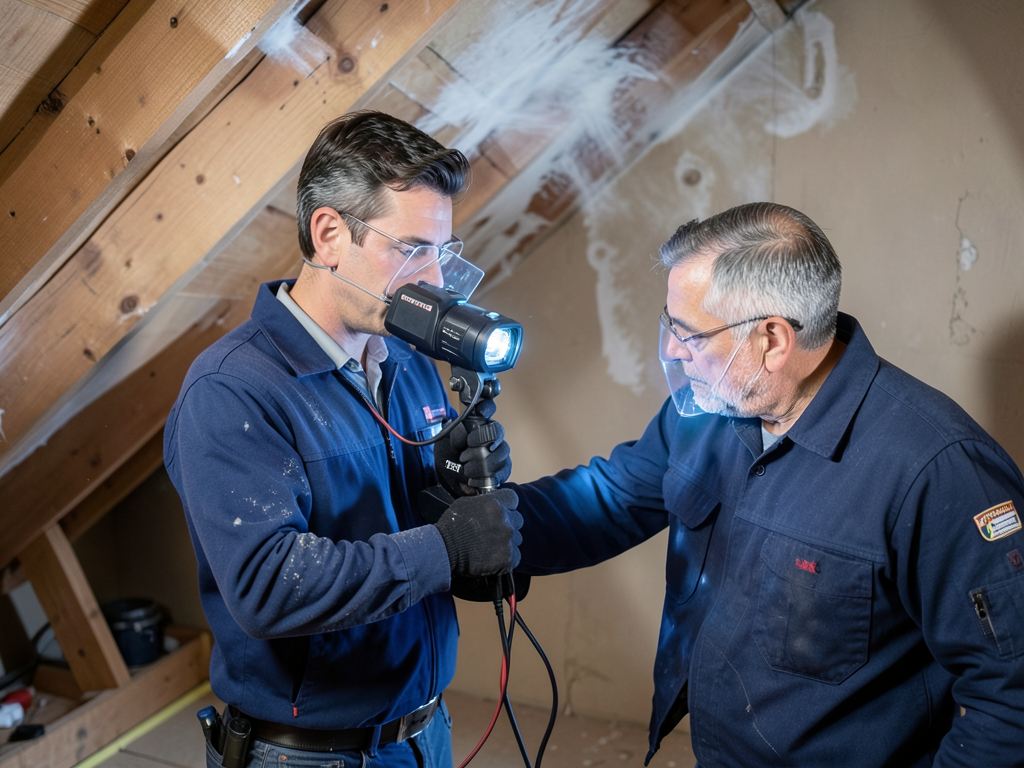
Homeowners often cannot tell the difference between condensation and a leak without the right tools. Restoration professionals use infrared thermal imaging cameras to detect cold spots where condensation forms. Moisture meters measure the actual water content of wood and drywall. Borescopes let technicians inspect tight attic spaces without disturbing insulation. These tools can pinpoint whether moisture is coming from inside or outside the home. If you are unsure call a certified water damage restoration technician rather than a roofer first. Misdiagnosing the source can lead to unnecessary roof repairs that do not solve the real problem. EPA mold guide.
Steps to Take Right Now
- Check the weather. If it has not rained in 48 hours and you still see moisture it is likely condensation.
- Inspect your attic safely. Look for widespread droplets or frost rather than a single drip point.
- Measure indoor humidity. If it is above 55 percent running a dehumidifier can help.
- Call for a professional moisture inspection if you see mold or wood rot.
Preventing Future Attic Moisture
Improving attic ventilation is the first defense against condensation. Ridge vents paired with soffit vents create continuous airflow that carries moist air out before it can condense. Sealing attic bypasses such as gaps around light fixtures and plumbing vents stops warm air from rising into the cold attic space. Adding or upgrading insulation to meet current R-30 to R-38 recommendations for Wake County helps maintain stable surface temperatures. If your home is near Umstead Park consider a professional energy audit to identify hidden air leaks. These steps not only stop condensation but also lower heating and cooling costs year round.
When to Call for Professional Help
Call a restoration company if you notice any of the following: visible mold growth, wood rot, sagging ceiling drywall, or persistent musty odors that do not go away after running a dehumidifier. A certified technician can perform a full moisture mapping of your attic and living space using IICRC S500 standards. They will also check for hidden damage behind walls that may not be visible. If the problem is a roof leak they can coordinate with a licensed roofer to fix the source before restoring the damaged structure. Do not wait until the problem spreads into your living space. Water Damage Restoration Cary.
Frequently Asked Questions
Can I just add more insulation to stop condensation?
Adding insulation alone can sometimes make condensation worse if ventilation is not improved first. Trapped moist air will still condense on cold surfaces. The best approach is to seal air leaks add proper ventilation then upgrade insulation.
How long does it take for mold to grow in a wet attic?
Under North Carolina’s humid conditions mold can begin to grow within 24 to 48 hours of continuous moisture exposure. This is why rapid diagnosis and drying are critical.
Will my homeowner’s insurance cover this?
Insurance typically covers sudden roof leaks but not long-term condensation caused by maintenance issues. If the damage is from a covered peril like storm damage your policy may pay for both repair and restoration.
Take Action Before the Next Cold Snap
Attic condensation in Umstead homes is a year round risk that peaks during temperature swings. If you are seeing unexplained moisture on dry days do not assume it is a roof leak. A professional inspection can save you from costly repairs and protect your family’s health. Call (984) 294-5900 today to schedule a moisture assessment and stop the drip before it becomes a flood.
You may also find this helpful. Can Solar Panel Installation Cause Roof Leaks in Your Blue Ridge Home?.