
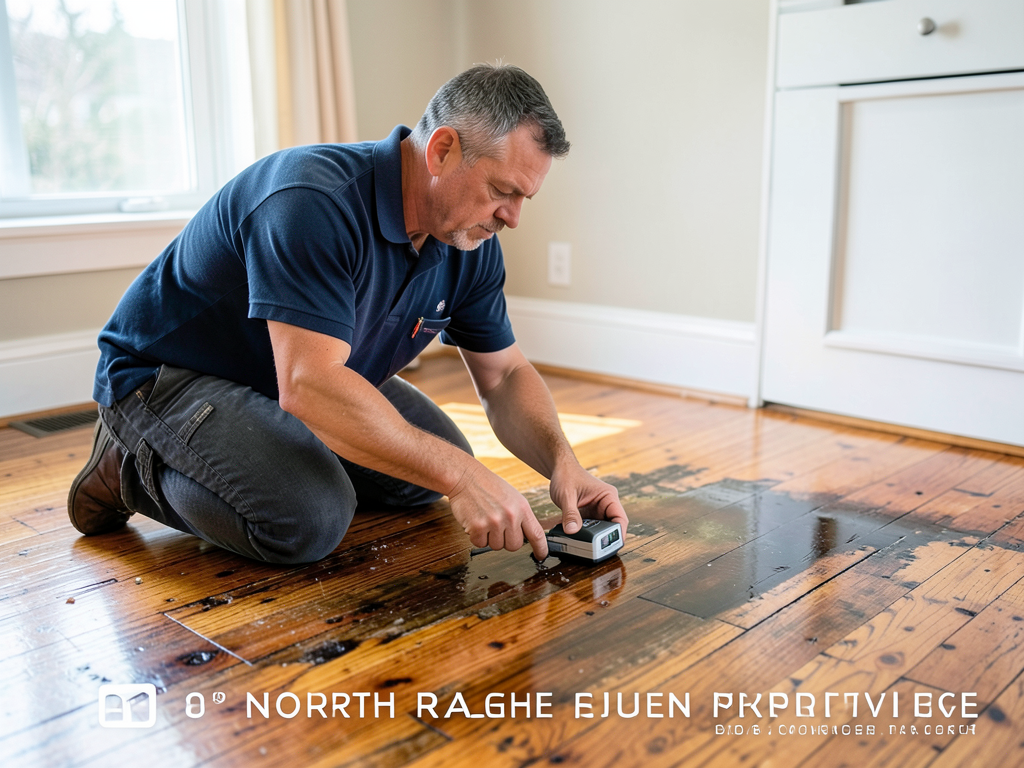
Repairing Water Damaged Hardwood Floors in North Raleigh Homes
Hardwood floors add warmth and value to North Raleigh homes but become vulnerable when water intrudes. Whether from a burst pipe near North Hills or storm flooding in Wakefield moisture causes cupping crowning and buckling that can destroy expensive flooring if not treated properly. In Raleigh’s humid climate water damage requires rapid response using IICRC S500 standards to prevent mold growth and structural failure. IICRC S500 standards.
The first 24 hours determine whether floors can be saved. Standing water wicks into wood pores within minutes causing expansion and warping. Without proper extraction and dehumidification damage becomes permanent. Our North Raleigh technicians arrive within 60 minutes with commercial-grade equipment to remove water and begin the drying process immediately. How to Choose the Best Water Restoration Company in Cary Without Getting Ripped Off.
Understanding Hardwood Floor Water Damage
Water damage to hardwood floors manifests in three primary ways. Cupping occurs when moisture penetrates from below causing edges to rise higher than the center. Crowning happens when the top surface absorbs more moisture than the bottom creating a convex shape. Buckling represents the most severe damage where planks completely separate from the subfloor due to extreme expansion. Water Damage Restoration Cary.
North Carolina’s climate accelerates these problems. The Research Triangle’s average humidity exceeds 70% during summer months creating perfect conditions for moisture retention in wood. When water intrudes Raleigh’s clay soil and poor drainage in neighborhoods like Five Points trap moisture around foundations forcing it upward through subfloors. High Indoor Humidity Levels.
Different wood species respond uniquely to water exposure. Red oak common in Wake County homes absorbs moisture quickly but also releases it efficiently when dried properly. Pine flooring found in older Raleigh homes tends to swell more dramatically and may require longer drying times. Engineered hardwood with plywood cores often survives water exposure better than solid wood but the veneer layer can delaminate if not treated promptly. Water Damage Restoration Apex.
Moisture content tells the restoration story. Healthy hardwood floors maintain 6-9% moisture content. After water damage floors may reach 20% or higher. Our technicians use moisture meters to track progress targeting 12% as the minimum safe level before refinishing begins.
North Raleigh’s Vulnerability to Hardwood Floor Water Damage
North Raleigh’s rapid development creates unique water damage risks. New construction in areas like Brier Creek often experiences settling that causes foundation cracks. Older homes near Millbrook Road have aging plumbing systems prone to sudden failures. The area’s mix of slab-on-grade and crawl space foundations means water can enter from multiple sources.
North Hills’ high-density development concentrates water damage risk. When one unit experiences a plumbing failure adjacent units often suffer collateral damage. The area’s concrete slab construction allows water to spread laterally rather than vertically affecting multiple rooms before detection.
Wake County’s building codes require specific moisture barriers in crawl spaces but many older North Raleigh homes predate these requirements. Without proper vapor barriers ground moisture migrates upward through subfloors creating chronic humidity problems that make floors more susceptible to water damage when incidents occur.
The Neuse River watershed’s heavy clay soil retains water near foundations. During North Carolina’s hurricane season this soil expands and contracts creating pressure that can crack foundation walls and allow groundwater intrusion into basements and crawl spaces throughout North Raleigh.
Our Raleigh-Specific Restoration Process
Professional hardwood floor restoration follows a systematic approach based on IICRC S500 standards. The process begins with immediate water extraction using truck-mounted units that remove standing water at 500-1000 gallons per hour. This prevents further absorption into wood fibers.
Next we deploy high-velocity air movers strategically placed to create airflow across floor surfaces. These units move 1500-3000 cubic feet of air per minute evaporating moisture from wood pores. Dehumidifiers with 70-100 pint capacity remove the evaporated moisture from the air preventing secondary damage to walls and contents.
Moisture mapping guides our drying strategy. Technicians use penetrating moisture meters to test wood at multiple depths identifying wet areas that require focused attention. Non-penetrating meters scan large areas quickly revealing moisture patterns that indicate water migration paths.
Subfloor inspection determines restoration feasibility. If water penetrated through joints or from below the subfloor may need replacement even if the hardwood surface appears salvageable. We remove select boards to inspect subfloor moisture content and structural integrity.
The drying timeline varies by damage severity. Light cupping may resolve in 3-5 days with proper equipment. Severe buckling often requires 7-14 days of continuous drying. Throughout the process we monitor moisture levels twice daily adjusting equipment placement based on progress.
Once moisture content reaches target levels we assess restoration options. Minor cupping may resolve completely with proper drying. Moderate damage often requires sanding and refinishing. Severe buckling or delamination typically necessitates board replacement.
Hardwood Species Guide: Treating Oak Pine and Engineered Wood
Red oak flooring dominates North Raleigh homes due to its durability and stain acceptance. When wet red oak’s open grain structure allows rapid moisture absorption but also facilitates efficient drying. We typically achieve 90% restoration success with properly dried red oak though cupping may require light sanding.
White oak offers better water resistance due to its tighter grain structure. Many newer North Raleigh developments feature white oak because it resists moisture penetration better than red oak. However once water breaches the surface finish white oak can trap moisture internally requiring more aggressive drying techniques.
Pine flooring common in Wake County’s historic homes presents unique challenges. Pine’s soft nature makes it prone to deep gouging and splintering when wet. The wood’s resin content can create surface adhesion problems during refinishing. We often recommend board replacement for severely damaged pine rather than attempting restoration.
Engineered hardwood’s layered construction affects restoration potential. The plywood core resists moisture better than solid wood but the veneer layer can delaminate if water penetrates the joints. Our moisture meters detect delamination risk by measuring differential moisture content between layers.
Bamboo flooring increasingly popular in North Raleigh’s eco-conscious homes behaves differently than traditional hardwoods. Bamboo’s grass-based structure resists warping but can develop surface checking when dried too quickly. We use lower-temperature drying for bamboo to prevent thermal damage.
Insurance Claim Assistance for Raleigh Homeowners
Water damage restoration in North Raleigh often involves insurance claims. Most homeowner policies cover sudden water damage from plumbing failures but exclude gradual damage or flood events. Our technicians document damage with moisture readings photographs and detailed reports that satisfy insurance adjusters.
We work directly with insurance companies to streamline claims. Our documentation includes IICRC classification of water damage (Category 1 2 or 3) which determines coverage eligibility. We provide line-item estimates using industry-standard Xactimate software that most insurers recognize. industry-standard Xactimate software.
Time sensitivity affects coverage. Most policies require notification within 14 days of water damage discovery. Delayed reporting can result in claim denial even for covered events. We help customers understand their policy limitations and document damage thoroughly to support timely claims.
Some North Raleigh homeowners’ associations require specific restoration methods to maintain property values. We coordinate with HOA boards when necessary ensuring our restoration work meets community standards while satisfying insurance requirements.
Local Case Studies: Recent Hardwood Projects in North Raleigh
A Wakefield townhome experienced a second-floor washing machine supply line failure that flooded through to the main level. The engineered hardwood in the living room showed severe cupping within 12 hours. Our team extracted standing water and deployed drying equipment. After five days of monitoring moisture content dropped from 22% to 13% allowing successful refinishing rather than replacement.
A North Hills condominium suffered water damage when a neighboring unit’s water heater failed. The concrete slab construction allowed water to spread laterally affecting three units. Our moisture mapping revealed the migration pattern and we dried all affected areas simultaneously to prevent mold growth in the shared wall cavities.
An older home near Millbrook Road experienced a pipe burst during a winter freeze. The solid red oak flooring in the dining room developed extensive buckling. We removed select boards to access the crawl space and discovered the subfloor had absorbed significant moisture. Complete restoration required subfloor replacement and new oak flooring installation.
A Brier Creek residence had chronic humidity issues that weakened the hardwood floor’s finish. When a minor leak occurred from an ice maker supply line the floor absorbed moisture rapidly causing widespread cupping. Our assessment revealed the underlying humidity problem required crawl space encapsulation before floor restoration could succeed.
Preventing Future Hardwood Floor Water Damage
Preventive maintenance reduces water damage risk in North Raleigh homes. Annual plumbing inspections identify deteriorating supply lines before they fail. We recommend replacing washing machine hoses every five years and installing water alarm sensors near water heaters and under sinks.
Proper humidity control prevents chronic moisture problems. North Carolina’s climate requires year-round humidity management. We recommend maintaining indoor humidity between 30-50% using whole-house dehumidifiers or standalone units in problem areas like finished basements.
Floor finish condition affects water resistance. Modern polyurethane finishes provide excellent moisture protection but they degrade over time. Professional refinishing every 5-7 years maintains the protective barrier that prevents water from penetrating wood pores.
Appliance maintenance prevents common failure sources. Water heater replacement before the 10-year mark reduces burst tank risk. Ice maker supply lines should use braided stainless steel rather than plastic tubing. Dishwasher leaks often originate from door seal deterioration which occurs gradually over 3-5 years.
Landscape grading directs water away from foundations. North Raleigh’s heavy clay soil requires proper slope away from the house. We recommend 6 inches of fall within the first 10 feet from the foundation to prevent groundwater pressure against basement walls.
Comparing Restoration vs. Replacement Costs
| Damage Level | Restoration Cost | Replacement Cost | Time Required |
|---|---|---|---|
| Light Cupping (100 sq ft) | $500-800 | $2000-3000 | 3-5 days |
| Moderate Damage (300 sq ft) | $1500-2500 | $5000-7000 | 5-7 days |
| Severe Buckling (500 sq ft) | $3000-5000 | $8000-12000 | 7-14 days |
Cost factors influence restoration decisions. Light cupping affecting 100 square feet might cost $500-800 to dry and refinish. Severe buckling across 500 square feet could require $3000-5000 in restoration or $8000-12000 for complete replacement including subfloor work.
Time factors matter for occupied homes. Restoration typically takes 5-14 days depending on damage severity. Replacement requires similar timelines but may extend if matching existing flooring proves difficult. Insurance coverage often favors restoration when feasible to minimize claim costs.
Value retention affects long-term decisions. Original hardwood flooring often increases home value more than replacement flooring especially in historic North Raleigh neighborhoods. Our assessments consider both immediate repair costs and long-term property value impact.
Environmental factors influence material choices. Solid hardwood restoration produces less landfill waste than replacement. Many North Raleigh homeowners prefer restoration for sustainability reasons particularly when dealing with exotic wood species or custom-stained floors.
Future risk assessment guides final recommendations. If water damage resulted from chronic moisture problems simple restoration may not prevent recurrence. We evaluate whether additional measures like crawl space encapsulation or plumbing upgrades provide better long-term value than repeated restoration.
Frequently Asked Questions
How long does hardwood floor water damage take to become permanent?
Water begins absorbing into wood pores within 30 minutes of contact. Cupping can start within 24 hours. After 48-72 hours damage often becomes irreversible without professional intervention. The North Carolina climate’s high humidity accelerates this process.
Can buckled hardwood floors be saved?
Severe buckling requires careful assessment. If the subfloor remains structurally sound and moisture content drops below 15% many buckled floors can be reattached and refinished. However boards that have delaminated or developed mold typically require replacement.
Will my insurance cover water damaged hardwood floors?
Coverage depends on the water source. Sudden plumbing failures are typically covered under standard policies. Gradual damage from humidity or flooding usually requires separate flood insurance. We help document damage to support insurance claims.
How can I tell if my hardwood floors have water damage?
Look for cupping (edges higher than center) crowning (center higher than edges) or buckling (complete separation from subfloor). Moisture meters can detect hidden damage before visual signs appear. Musty odors often indicate developing mold problems.
What’s the difference between cupping and crowning?
Cupping occurs when the bottom of boards absorbs more moisture than the top causing edges to rise. Crowning happens when the top surface absorbs more moisture creating a convex shape. Both indicate moisture imbalance that requires professional drying.
How long does the restoration process take?
Minor damage may require 3-5 days of drying. Severe cases need 7-14 days with daily monitoring. Refinishing adds 2-3 days if required. We provide specific timelines after initial assessment based on your floor’s condition.
Should I try to dry water damaged floors myself?
DIY drying often causes more damage. Household fans and dehumidifiers lack the capacity to properly dry hardwood. Rapid drying can cause additional warping or cracking. Professional equipment and monitoring ensure proper moisture content restoration.
How much does hardwood floor water damage restoration cost?
Costs vary by damage extent and floor area. Light damage restoration starts around $500. Severe cases requiring board replacement can exceed $5000. We provide detailed estimates after assessment and can work with your insurance company.
What causes hardwood floors to cup?
Cupping results from moisture imbalance between the top and bottom of boards. Common causes include plumbing leaks high humidity groundwater intrusion through subfloors or improper moisture content during installation. North Carolina’s climate makes cupping particularly common.
Can water damaged engineered hardwood be saved?
Engineered hardwood’s salvageability depends on the veneer thickness and damage extent. Surface moisture damage often responds well to professional drying. If water penetrates joints and affects the core layers replacement becomes necessary.
How do I prevent water damage to my hardwood floors?
Install water sensors near potential leak sources. Maintain indoor humidity between 30-50%. Inspect plumbing annually. Use quality floor finishes and maintain them properly. Address foundation drainage issues to prevent groundwater intrusion.
What should I do immediately after discovering water on my hardwood floors?
Stop the water source if possible. Remove standing water with towels or a wet vacuum. Increase air circulation with fans. Call professionals immediately. Avoid walking on wet floors to prevent further damage and warping.
Emergency Response: What to Expect When You Call
When water damages your hardwood floors every minute counts. Our North Raleigh team responds 24/7 with trained technicians who understand the urgency of wood floor restoration. We arrive within 60 minutes with commercial-grade extraction equipment and moisture detection tools.
Our initial assessment includes moisture mapping to identify the damage extent and determine whether restoration or replacement offers the best outcome. We explain our findings in plain language and provide clear recommendations with cost estimates.
Throughout the restoration process we keep you informed about progress and any necessary adjustments to our approach. Our goal is returning your home to normal as quickly as possible while preserving your valuable hardwood flooring whenever feasible.
Don’t let water damage destroy your hardwood floors. Call (984) 294-5900 now for immediate professional assessment and restoration. Our IICRC-certified technicians serve all North Raleigh neighborhoods with the expertise and equipment needed to save your floors.
Why Choose Professional Restoration Over DIY
Professional restoration offers advantages that DIY approaches cannot match. Our commercial-grade equipment extracts water at rates 10-20 times faster than household shop vacuums. Industrial dehumidifiers remove moisture from the air that DIY units cannot handle preventing secondary damage.
Moisture meters provide data that guides proper drying. Without professional monitoring floors may appear dry while retaining moisture in subfloors or wall cavities. This hidden moisture causes problems weeks later when mold develops or boards warp during seasonal humidity changes.
Insurance documentation requires professional assessment. Our IICRC certification and detailed reporting satisfy insurance requirements that DIY documentation cannot meet. We’ve helped hundreds of North Raleigh homeowners successfully navigate insurance claims for water damage.
Time efficiency matters when water damages your home. Our team works systematically to minimize disruption while maximizing restoration success. We understand that every day without access to affected rooms impacts your family’s routine.
Professional restoration also includes mold prevention measures that DIY approaches miss. Our antimicrobial treatments and proper drying protocols prevent the mold growth that often follows water damage protecting your family’s health and your home’s value.
Understanding North Carolina’s Climate Impact
North Carolina’s climate creates unique challenges for hardwood floor maintenance. The Research Triangle’s humidity levels frequently exceed 70% during summer months creating constant moisture exposure for wood floors. This baseline humidity makes floors more susceptible to damage when water events occur.
Seasonal temperature swings cause wood expansion and contraction. North Raleigh experiences 30-40 degree temperature variations between summer and winter. These changes stress floor joints and finishes making them more vulnerable to water penetration when incidents occur.
Hurricane season brings additional risks from June through November. Even indirect storm impacts can cause power outages that disable sump pumps or HVAC systems that control indoor humidity. Our hurricane preparation recommendations include water sensors and backup power solutions for critical equipment.
Winter freeze-thaw cycles create burst pipe risks. When temperatures drop below freezing even briefly pipes in exterior walls or crawl spaces can burst. The resulting water damage often goes unnoticed for hours or days allowing extensive damage to hardwood floors.
Understanding these climate factors helps prevent damage and guides restoration approaches. Our technicians factor local weather patterns into drying strategies adjusting equipment and timelines based on seasonal conditions.
Quality Assurance and Warranty
Our restoration work includes quality assurance measures that protect your investment. We provide detailed documentation of moisture readings throughout the drying process ensuring floors reach proper moisture content before refinishing begins.
Our warranty covers restoration workmanship for one year. If cupping or crowning returns within that period due to our restoration process we address it at no additional cost. This warranty reflects our confidence in our IICRC-certified technicians and proven restoration methods.
We also provide maintenance recommendations to help you protect your restored floors. These include proper cleaning products humidity control guidelines and early warning signs that indicate potential problems requiring attention. Retail Store Water Cleanup.
Our goal extends beyond immediate restoration to ensuring your floors remain beautiful and functional for years to come. We treat your home with the same care we would our own combining technical expertise with genuine concern for your family’s comfort.
Ready to Restore Your Hardwood Floors?
Water damage to hardwood floors requires immediate professional attention. Every hour of delay increases the risk of permanent damage and mold growth. Our North Raleigh team stands ready to respond 24/7 with the equipment and expertise needed to save your floors.
Don’t risk your valuable hardwood flooring with DIY approaches or delayed response. Call (984) 294-5900 now for emergency water damage restoration. Our IICRC-certified technicians will arrive quickly assess the damage and begin professional restoration immediately.
Whether you’re in North Hills Wakefield Brier Creek or anywhere else in North Raleigh we have the local knowledge and technical expertise to handle your hardwood floor water damage effectively. Your floors deserve professional care and your family deserves a quick return to normal.
Pick up the phone and call (984) 294-5900 before the next storm hits or the next pipe bursts. Professional hardwood floor restoration is just one call away.