
Restoring Your Business After Water Damage in the Research Triangle Park Area
Water damage in your Research Triangle Park business creates immediate threats to equipment, inventory, and operations. When pipes burst or storms flood your facility, every minute counts toward preventing mold growth and structural damage. Our commercial restoration team responds within 60 minutes to RTP locations, bringing industrial-grade equipment and IICRC-certified technicians who understand the unique challenges of high-tech office parks and research facilities. IICRC S500 Standards.
The Research Triangle Park area experiences specific water damage risks due to its concentration of advanced technology companies, pharmaceutical labs, and data centers. These facilities require specialized restoration protocols that go beyond standard residential cleanup. Our team maintains emergency response agreements with property managers throughout Morrisville, Cary, and Durham research corridors, ensuring rapid deployment when disaster strikes. How to Choose the Best Water Restoration Company in Cary Without Getting Ripped Off.
Specialized Services for RTP Commercial Properties
Research Triangle Park businesses face unique water damage challenges that require industry-specific expertise. Data centers contain sensitive electronic equipment vulnerable to humidity fluctuations. Biotech labs store valuable research materials requiring contamination control. Retail hubs in the Park need minimal business interruption during restoration. Who to Call for Emergency Water Damage in Downtown Raleigh at 3 AM.
Our technicians understand the critical nature of maintaining cleanroom standards in pharmaceutical facilities. We use HEPA filtration systems and antimicrobial treatments that meet FDA requirements for controlled environments. For data centers, we deploy precision dehumidification to prevent electrostatic discharge damage to servers and networking equipment. Water Damage Restoration Cary.
Commercial retail spaces in Park Center and other RTP shopping areas require rapid water extraction to protect merchandise and prevent slip-and-fall liability. Our fleet includes truck-mounted extraction units capable of removing thousands of gallons per hour, allowing stores to reopen quickly after flooding incidents.
Commercial Restoration Process for Large Facilities
Large-scale water damage in RTP facilities requires a systematic approach following IICRC S500 standards. We begin with comprehensive moisture mapping using thermal imaging cameras to identify hidden water pockets behind walls and under flooring. This diagnostic process prevents secondary damage that occurs when moisture remains undetected.
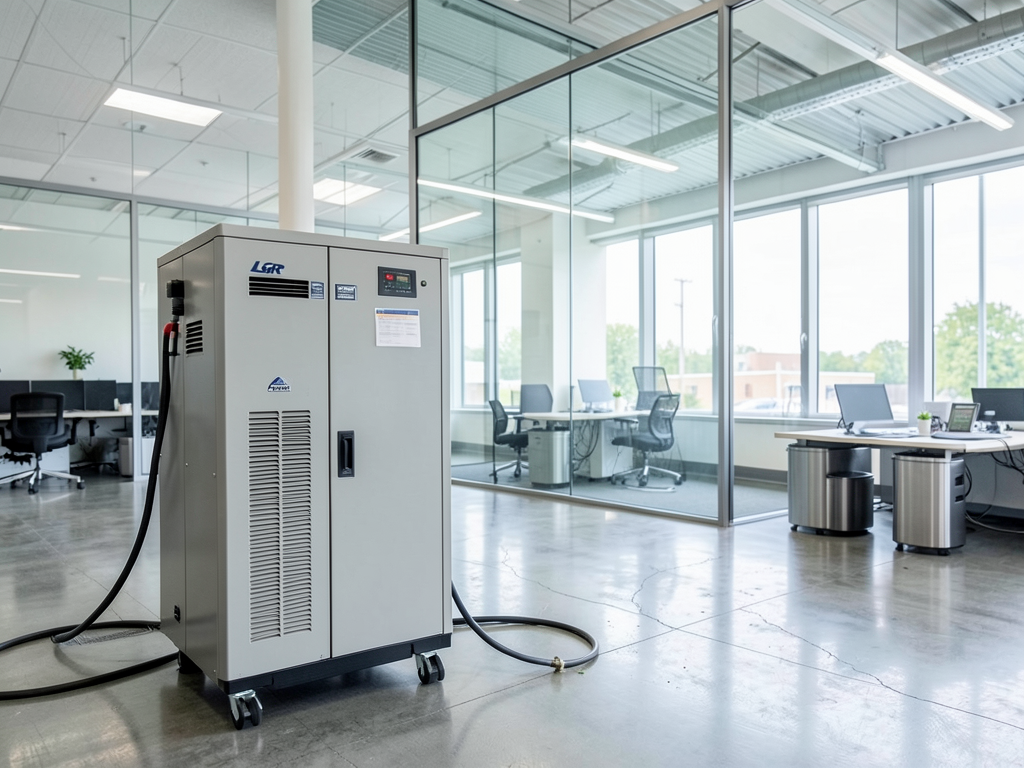
Industrial-grade LGR (Low Grain Refrigerant) dehumidifiers remove moisture from concrete slabs and steel structures common in modern RTP buildings. These units extract 20-30 gallons of water per day, significantly faster than residential equipment. We position axial air movers strategically to create optimal airflow patterns for structural drying.
Category 3 water from sewage backups or storm flooding requires complete decontamination. We apply EPA-registered antimicrobial solutions and remove contaminated materials following OSHA guidelines. Our technicians wear full PPE during black water cleanup to protect both workers and facility occupants. OSHA guidelines.
Structural cavity drying techniques access water trapped in wall cavities and ceiling spaces without demolition. We use injectidry systems that force dry air through small access points, preserving expensive finishes and reducing reconstruction costs for RTP businesses.
Navigating Commercial Insurance Claims in North Carolina
Commercial water damage claims in North Carolina follow specific procedures under state insurance regulations. Our team works directly with adjusters to document losses using moisture readings, thermal imaging, and detailed damage assessments. We provide the technical documentation major carriers require for Category 2 and 3 water claims.
Business interruption coverage often applies when water damage forces facility closure. We help quantify lost revenue by documenting the timeline from initial damage to full restoration. Our detailed drying logs and progress reports support claims for additional living expenses or temporary relocation costs.
Many RTP companies have preferred vendor agreements with restoration companies. We maintain relationships with major property management firms and insurance companies serving the Triangle area. Our team understands the documentation requirements for self-insured corporate entities and government contractors operating in the Park.
Commercial policies often include specific endorsements for equipment breakdown or contamination. We assess whether water damage to specialized machinery requires additional coverage beyond standard property insurance. Our technicians can provide equipment-specific restoration estimates for manufacturing equipment, laboratory instruments, and IT infrastructure.
Why Local Expertise Matters in the Triangle
The Research Triangle Park’s unique geography creates specific water damage challenges. The area’s clay soil composition affects foundation drainage, causing water to pool around building perimeters during heavy rains. Many RTP facilities sit on former agricultural land with poor natural drainage, requiring specialized French drain systems.
North Carolina’s humid climate accelerates mold growth in water-damaged buildings. Within 24-48 hours, spores can colonize damp materials in RTP’s temperature-controlled environments. Our antimicrobial treatments include fungicides specifically formulated for the Southeast’s high humidity conditions. High Indoor Humidity Levels.
The I-40 corridor’s rapid development has increased impervious surfaces around RTP, leading to flash flooding during summer thunderstorms. We understand the drainage patterns and flood zones affecting specific business parks along the highway. Our team maintains flood barrier equipment for properties in low-lying areas near Research Drive and Davis Drive.
Many RTP buildings feature modern construction techniques with vapor barriers and sealed envelopes. While energy-efficient, these designs can trap moisture if water intrusion occurs. We use specialized moisture meters calibrated for low-permeability building materials common in the Park’s newer facilities.
Emergency Response Agreements for RTP Property Managers
Property managers throughout Research Triangle Park benefit from pre-established emergency response agreements. These contracts guarantee priority service and preferred pricing for building owners in the Park’s corporate campuses. Our team maintains 24/7 dispatch capability with technicians strategically located throughout the Triangle.
Large office complexes require coordinated restoration efforts to minimize tenant disruption. We work with facility managers to establish containment zones and maintain critical operations during water damage mitigation. Our team understands the complexities of restoring multi-tenant buildings with shared HVAC systems and utility infrastructure.
Industrial parks in RTP often contain mixed-use facilities with manufacturing, office, and warehouse spaces. Each area requires different restoration approaches based on the materials and equipment present. We assess the specific needs of each zone within a facility to develop comprehensive restoration plans.
Government contractors in the Park face additional compliance requirements for classified facilities. Our team maintains security clearances and understands the protocols for working in restricted areas. We document all restoration activities for audit trails required by federal contracts.
Advanced Equipment for Commercial Restoration
Commercial water damage restoration requires industrial-grade equipment unavailable to most contractors. Our fleet includes desiccant dehumidifiers capable of drying 50,000+ square foot facilities. These units reduce humidity to 10% RH, essential for preventing corrosion in electronic equipment and preserving paper documents.
High-volume air movers create airflow patterns that accelerate evaporation from structural materials. We use 2,800 CFM units for large open spaces common in RTP’s office buildings and research facilities. These machines reduce drying times by 50% compared to standard equipment.
Infrared thermal imaging identifies temperature differentials indicating moisture presence. This technology allows us to locate hidden leaks behind walls without destructive testing. We document moisture patterns with thermal imaging to demonstrate drying progress to property owners and insurance adjusters.
Moisture meters with multiple probe types assess different materials. We use pin-type meters for wood framing and pinless meters for concrete and tile surfaces. Our technicians understand the specific moisture content thresholds for various building materials used in RTP construction.
Business Continuity Planning for Water Emergencies
Effective water damage response includes pre-planning for business continuity. We help RTP companies develop emergency response protocols that minimize operational disruption. These plans include critical contact information, utility shut-off procedures, and temporary relocation options.
Many RTP businesses operate 24/7 data centers and research facilities. We understand the complexities of maintaining power and climate control during restoration. Our team coordinates with IT departments to protect sensitive equipment and maintain network operations when possible.
Manufacturing facilities require special consideration for production equipment and inventory. We develop phased restoration plans that allow partial operations to continue while addressing water damage. Our team understands the scheduling constraints of just-in-time manufacturing common in RTP’s tech corridor.
Research facilities often contain irreplaceable samples and ongoing experiments. We work with scientists to protect critical research materials during water damage restoration. Our team understands the importance of maintaining specific environmental conditions for biological samples and chemical compounds.
Preventing Future Water Damage in RTP Facilities
Post-restoration prevention includes identifying and addressing the source of water intrusion. We inspect plumbing systems, roof structures, and foundation drainage to prevent repeat incidents. Our team provides detailed reports with recommendations for repairs and improvements.
Many RTP buildings have aging infrastructure requiring proactive maintenance. We identify plumbing systems nearing end-of-life and recommend upgrades before catastrophic failures occur. Our technicians understand the specific challenges of maintaining large commercial buildings in the Triangle’s climate.
Roof inspections often reveal vulnerabilities contributing to water damage. We assess membrane integrity, flashing conditions, and drainage systems on RTP’s flat-roofed research facilities. Our team recommends preventative maintenance to extend roof life and prevent future leaks.
Foundation drainage improvements prevent groundwater intrusion common in RTP’s clay soil areas. We install or repair French drains, sump pumps, and exterior waterproofing systems. Our team understands the specific drainage challenges of buildings constructed on former agricultural land in the Park.
Specialized Services for RTP Industries
Pharmaceutical companies in RTP require contamination control during water damage restoration. We use HEPA filtration and antimicrobial treatments that meet industry standards for cleanroom environments. Our team understands the validation requirements for pharmaceutical manufacturing facilities.
Biotech startups often operate in shared lab spaces with expensive equipment. We coordinate restoration efforts to protect sensitive instruments and ongoing research. Our team understands the importance of maintaining specific environmental conditions for biological samples and cell cultures.
IT companies with data centers require precision humidity control during restoration. We use desiccant dehumidification to maintain specific RH levels required for electronic equipment. Our team understands the risks of electrostatic discharge and corrosion in server rooms.
Financial services companies in RTP require data protection during water damage events. We coordinate with IT departments to protect servers and maintain network operations when possible. Our team understands the compliance requirements for financial institutions operating in the Park.
Compliance and Safety Standards
Commercial water damage restoration in RTP must comply with multiple regulations. We follow OSHA guidelines for worker safety during restoration operations. Our team maintains current certifications in confined space entry, fall protection, and hazardous materials handling.
EPA regulations govern the disposal of contaminated materials from water damage sites. We maintain proper documentation for waste disposal and follow all environmental protection requirements. Our team understands the specific regulations for disposing of materials from pharmaceutical and biotech facilities.
North Carolina building codes require specific restoration techniques for commercial properties. We follow the North Carolina State Building Code for structural repairs and modifications. Our team maintains relationships with local building officials to ensure compliance throughout the restoration process. Local Experts for Mold Remediation and Water Damage in Five Points.
Fire safety systems must remain operational during water damage restoration. We coordinate with fire marshals to maintain sprinkler system functionality and emergency lighting. Our team understands the specific requirements for restoring facilities with active fire protection systems.
Case Studies: RTP Water Damage Restoration
A pharmaceutical company in Park Center experienced a Category 3 water event from a sewage backup affecting 15,000 square feet of laboratory space. Our team deployed 12 technicians with industrial equipment, completing decontamination in 72 hours while maintaining critical operations in unaffected areas.
A data center in Morrisville suffered water damage from a rooftop HVAC unit failure. We used desiccant dehumidification to maintain specific humidity levels required for server operations while extracting water from the raised floor system. The facility remained operational throughout restoration.
A retail complex in RTP experienced flash flooding during a summer thunderstorm. Our team extracted 8,000 gallons of water from the building, allowing stores to reopen within 48 hours. We coordinated with property management to maintain customer access to unaffected areas during restoration.
Technology and Innovation in Restoration
Modern water damage restoration relies on advanced technology for efficient mitigation. We use moisture mapping software that creates 3D models of affected areas, allowing precise targeting of drying equipment. This technology reduces restoration time and energy consumption.
Remote monitoring systems track humidity and temperature throughout the drying process. We provide real-time data to property managers and insurance adjusters, demonstrating progress and ensuring optimal drying conditions. This documentation supports claims and prevents secondary damage.
Project management software coordinates multiple technicians and equipment across large facilities. We track every piece of equipment and technician movement, ensuring efficient resource allocation. This technology allows us to scale operations for large commercial losses in RTP.
Documentation systems create comprehensive reports for insurance claims and compliance requirements. We use mobile apps to capture photos, moisture readings, and progress notes in real-time. This documentation supports claims and provides property owners with detailed restoration records.
Cost Factors for Commercial Restoration
Commercial water damage restoration costs vary based on several factors. The size of the affected area directly impacts equipment and labor requirements. Large RTP facilities require more extensive drying equipment and longer restoration timelines.
Water category affects restoration complexity and cost. Category 3 water requires complete decontamination and material removal, significantly increasing restoration expenses. Our team provides detailed cost estimates based on water classification and contamination levels.
Business interruption costs often exceed restoration expenses. We work with property managers to develop strategies that minimize operational disruption and associated revenue losses. Our team understands the financial impact of facility closures on RTP businesses.
Insurance coverage affects out-of-pocket expenses for commercial restoration. We coordinate with insurance adjusters to maximize coverage and minimize property owner costs. Our team provides the documentation required for claims processing and coverage verification.
Frequently Asked Questions
How quickly can you respond to water damage in RTP?
Our team maintains 24/7 dispatch capability with technicians strategically located throughout the Research Triangle Park area. We guarantee arrival within 60 minutes of your call, ensuring rapid response to minimize damage and business interruption.
What types of commercial properties do you service in RTP?
We service all commercial properties in Research Triangle Park including data centers, pharmaceutical labs, office buildings, retail centers, manufacturing facilities, and research institutions. Our team has experience with the specific requirements of high-tech and regulated industries.
Do you work with insurance companies for commercial claims?
Yes, we work directly with insurance adjusters and have established relationships with major carriers serving the RTP area. We provide detailed documentation, moisture readings, and progress reports required for commercial insurance claims processing.
What certifications do your technicians hold?
Our technicians maintain IICRC certification in water damage restoration, applied structural drying, and commercial drying specialist. We also hold certifications in OSHA safety standards, EPA lead-safe practices, and industry-specific requirements for pharmaceutical and biotech facilities.
Take Action Now to Protect Your RTP Business
Water damage in your Research Triangle Park facility creates immediate threats to operations, equipment, and inventory. Every hour of delay increases restoration costs and business interruption losses. Our team stands ready to respond with the equipment and expertise your commercial property requires.
Don’t let water damage shut down your operations. Call (984) 294-5900 today to schedule your inspection or request emergency response. Our IICRC-certified technicians will assess your situation and provide immediate recommendations to protect your investment.
Pick up the phone and call (984) 294-5900 before the next storm hits. With our 60-minute response guarantee and specialized RTP expertise, we’ll restore your business quickly and efficiently, getting you back to normal operations with minimal disruption.