
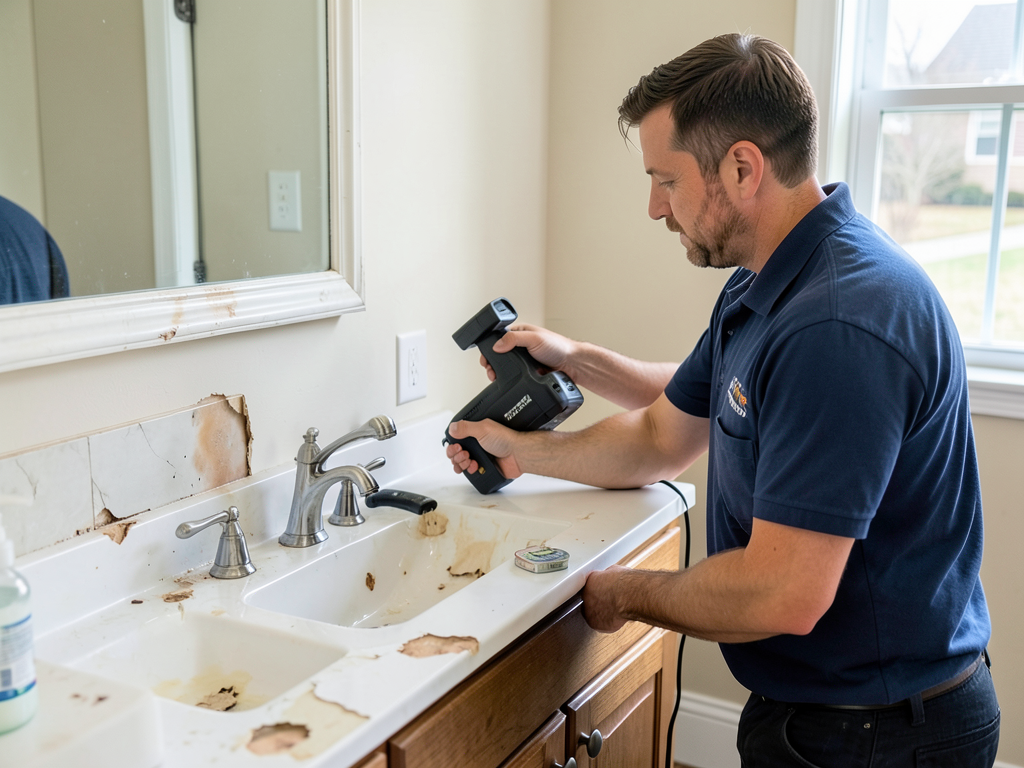
Saving Your Custom Bathroom Vanity From Water Damage in a Stonehenge Remodel
Water damage to your custom bathroom vanity can turn a beautiful Stonehenge remodel into a costly disaster. In Raleigh’s humid climate, bathroom cabinets face constant moisture exposure from steam, leaks, and condensation. The good news is that many water-damaged vanities can be saved with proper restoration techniques. This guide covers everything you need to know about identifying damage, making repair vs. replacement decisions, and when to call professional help. EPA mold information.
Understanding Water Damage in Bathroom Vanities
Bathroom vanities are particularly vulnerable to water damage because they sit directly on the floor where plumbing leaks occur and are exposed to daily moisture. The damage progresses through several stages, each requiring different intervention strategies. How to Choose the Best Water Restoration Company in Cary Without Getting Ripped Off.
Common Types of Vanity Water Damage
Particle board and MDF vanities swell and delaminate when exposed to moisture, while solid wood can warp, crack, and develop mold. The most frequent culprits include supply line failures, P-trap leaks, and condensation from poor ventilation. In older Raleigh homes, aging copper pipes can develop pinhole leaks that slowly saturate cabinet materials.
The first sign of water damage is often subtle swelling around the base or edges of the vanity. You might notice paint bubbling, veneer peeling, or a musty odor that indicates mold growth behind the cabinet. By the time soft spots appear in the cabinet floor, the damage has typically progressed to a critical stage. Who to Call for Emergency Water Damage in Downtown Raleigh at 3 AM.
Is Your Vanity Worth Saving?
Before deciding between repair and replacement, assess the extent of damage and the vanity’s value. Custom vanities with unique finishes, high-end hardware, or integrated features often justify professional restoration even when damage seems extensive. Water Damage Restoration Cary.
Repair vs. Replacement Decision Matrix
| Damage Level | Material Type | Cost to Repair | Replacement Cost | Recommended Action |
|---|---|---|---|---|
| Surface Only | Solid Wood | $200-400 | $2,000-5,000 | Repair |
| Surface Only | MDF/Particle Board | $300-600 | $1,500-3,000 | Repair if custom |
| Structural | Solid Wood | $800-1,500 | $2,000-5,000 | Repair if antique |
| Structural | MDF/Particle Board | $600-1,200 | $1,500-3,000 | Replace |
Consider the vanity’s age, style, and integration with other bathroom elements. A 20-year-old builder-grade vanity with delamination and soft spots is usually not worth repairing. However, a custom solid wood vanity with unique detailing or integrated storage solutions often justifies restoration costs.
Professional Restoration Process for Water-Damaged Vanities
Professional restoration goes far beyond surface repairs. It addresses the underlying moisture issues and prevents future damage. The process follows industry-standard protocols established by the IICRC (Institute of Inspection Cleaning and Restoration Certification). IICRC certification standards.
Step-by-Step Professional Restoration
- Moisture Assessment
Technicians use moisture meters and thermal imaging to detect hidden water pockets behind cabinets and in wall cavities. This diagnostic step reveals the full extent of damage that isn’t visible to the naked eye.
- Containment and Mold Prevention
Affected areas are sealed off to prevent cross-contamination. HEPA air filtration systems capture airborne mold spores during the restoration process.
- Structural Drying
Industrial-grade dehumidifiers and air movers create optimal drying conditions. The process typically takes 3-5 days depending on material density and damage severity.
- Material Removal and Preparation
Delaminated surfaces, rotted wood, and compromised materials are removed. The remaining structure is cleaned with antimicrobial solutions to prevent future mold growth.
- Structural Reinforcement
Weakened areas receive epoxy consolidation or wood replacement. Cabinet frames are reinforced to restore structural integrity.
- Finishing and Waterproofing
Surfaces are sanded, primed with moisture-resistant products, and finished with marine-grade polyurethane or specialized bathroom paints.
The restoration process addresses not just the visible damage but also the conditions that caused it. This includes checking plumbing connections, improving ventilation, and applying waterproofing treatments that prevent future moisture penetration.
Hidden Dangers: Mold and Structural Issues
Water damage in bathroom vanities often hides more serious problems. The warm, humid environment behind cabinets creates ideal conditions for mold growth, particularly black mold (Stachybotrys chartarum), which poses health risks.
According to the EPA, mold can begin growing within 24-48 hours of water exposure. By the time you notice visible mold, colonies have likely spread throughout the cabinet interior and wall cavity. Professional remediation requires containment, air filtration, and proper disposal of contaminated materials.
Structural issues often accompany water damage. Soft spots in the cabinet floor may indicate subfloor damage, while warping can compromise the vanity’s stability. In Raleigh’s older neighborhoods like Five Points and Inside the Beltline, many homes have aging plumbing that contributes to chronic moisture problems.
Preventing Future Vanity Water Damage
After restoring your vanity, implementing preventive measures protects your investment. Raleigh’s climate presents unique challenges with high humidity levels year-round and occasional tropical storm impacts.
Essential Prevention Strategies
- Install exhaust fans vented to the exterior, not the attic
- Use moisture-resistant paint with antimicrobial properties
- Apply silicone sealant around plumbing penetrations
- Install water leak detection sensors near plumbing connections
- Maintain proper ventilation during and after showers
Consider upgrading to PEX plumbing lines, which resist freezing and bursting better than copper in Raleigh’s occasional winter temperature drops. Also, check that your bathroom’s ventilation meets current North Carolina Residential Code requirements for moisture control.
Insurance Coverage for Vanity Water Damage
Homeowners insurance typically covers sudden, accidental water damage but not gradual deterioration or maintenance issues. A burst pipe causing vanity damage would likely be covered, while long-term leaks from deteriorating seals would not.
Document damage thoroughly with photos and videos before beginning cleanup. Keep all receipts for emergency services and temporary repairs. Your insurance adjuster will need evidence of the damage’s extent and cause to process your claim properly.
Professional restoration companies often assist with insurance documentation and can provide detailed reports that support your claim. This service can be invaluable when dealing with adjusters who may not understand the full scope of bathroom restoration needs.
Local Raleigh Considerations for Vanity Restoration
Raleigh’s unique climate and building patterns affect vanity restoration approaches. The area’s high humidity levels mean that even minor water exposure can lead to rapid mold growth and material degradation.
In historic neighborhoods like Oakwood and Boylan Heights, older homes may have plaster walls that complicate moisture remediation. These homes often require specialized techniques to preserve historic character while addressing water damage.
Modern developments in areas like Brier Creek and North Hills typically feature better moisture barriers but may have complex plumbing systems that make leak detection more challenging. Professional thermal imaging becomes particularly valuable in these newer constructions. What to Do When Your Brier Creek Office Floods Over the Weekend.
The North Carolina Department of Insurance reports that water damage claims are among the most frequent homeowner insurance claims in the state. Understanding local building codes and insurance requirements helps ensure your restoration meets all necessary standards. Local Experts for Mold Remediation and Water Damage in Five Points.
When to Call a Professional
While minor surface damage might be suitable for DIY repair, several situations require professional intervention. If you notice any of these signs, contact a certified water damage restoration specialist immediately.. Read more about The Warning Signs of a Failing Toilet Wax Ring in Your Chavis Heights Bathroom.
Structural damage, including soft spots, warping, or cracking that affects the vanity’s stability requires professional assessment. Mold growth visible on surfaces or detected by musty odors indicates contamination that needs proper remediation.
Water that has spread beyond the vanity to adjacent walls, floors, or ceilings creates complex moisture issues that DIY methods cannot adequately address. The same applies to damage from contaminated water sources like sewage backups or flooding.
Professional restoration ensures that all moisture is removed, mold is properly remediated, and the underlying causes of damage are addressed. This comprehensive approach prevents recurring problems and protects your home’s value.
Cost Factors in Vanity Restoration
Several factors influence the cost of professional vanity restoration. Material type plays a significant role, with solid wood restoration typically costing more than particle board repair due to the specialized techniques required.
Damage extent affects pricing dramatically. Surface damage requiring only cosmetic repairs costs far less than structural damage needing material replacement and reinforcement. Mold remediation adds significant costs due to the specialized equipment and procedures required.
Urgency impacts pricing as well. Emergency services during nights, weekends, or holidays typically carry premium rates. However, rapid response often prevents further damage, potentially saving money in the long run.
Geographic location within Raleigh affects pricing due to varying labor costs and travel distances. Services in downtown areas may cost more than those in suburban locations, though this difference is usually minimal compared to the overall project scope.
Choosing the Right Restoration Professional
When selecting a restoration company for your bathroom vanity, verify proper certifications and insurance coverage. Look for IICRC certification, which ensures technicians follow industry-standard protocols for water damage restoration.
Check reviews and ask for references from similar projects. A company experienced with bathroom vanities understands the unique challenges these projects present, from moisture management to matching existing finishes.
Ensure the company offers comprehensive services including moisture detection, mold remediation, and structural drying. This prevents the need to coordinate multiple contractors and ensures consistent quality throughout the restoration process.
Ask about insurance claim assistance. Many reputable restoration companies help document damage and communicate with insurance adjusters, simplifying the claims process and ensuring you receive appropriate compensation.
Frequently Asked Questions
How long does vanity restoration take?
Minor surface repairs can be completed in 1-2 days, while comprehensive restoration including drying and mold remediation typically takes 5-7 days. The exact timeline depends on damage extent and material types involved.
Can I stay in my home during restoration?
For minor repairs, you can usually remain in your home. However, extensive mold remediation or structural work may require temporary relocation to ensure safety and allow proper containment procedures.
Will restored vanities match the original finish?
Professional restoration includes color matching and finish replication to ensure the repaired areas blend seamlessly with existing surfaces. High-end restoration can make damage virtually undetectable.
How can I prevent future water damage?
Install water leak detectors, maintain proper bathroom ventilation, check plumbing connections regularly, and address any signs of moisture immediately. Consider upgrading to moisture-resistant materials in high-risk areas.
Does homeowners insurance cover vanity restoration?
Insurance typically covers sudden, accidental water damage but not gradual deterioration or maintenance issues. Check your specific policy details and document damage thoroughly to support your claim.
Protect Your Investment
Your custom bathroom vanity represents a significant investment in your home’s value and your daily comfort. When water damage threatens this investment, prompt action and professional restoration can save both the vanity and your peace of mind.
Don’t let water damage turn your beautiful bathroom into a source of stress and potential health hazards. Whether you’re dealing with minor swelling or extensive structural damage, understanding your options helps you make informed decisions about repair vs. replacement.
Remember that the cheapest solution isn’t always the most cost-effective. Professional restoration addresses underlying issues and prevents recurring problems, ultimately protecting your home’s value and your family’s health.
If you’re facing water damage to your bathroom vanity in Raleigh, don’t wait for the problem to worsen. Call (984) 294-5900 today to schedule your inspection. Our certified technicians are ready to help you save your custom vanity and restore your bathroom to its former beauty.
Pick up the phone and call (984) 294-5900 before the next storm hits. Water damage waits for no one, but professional help is just a call away. Let us help you turn this challenge into an opportunity to protect and enhance your home.