
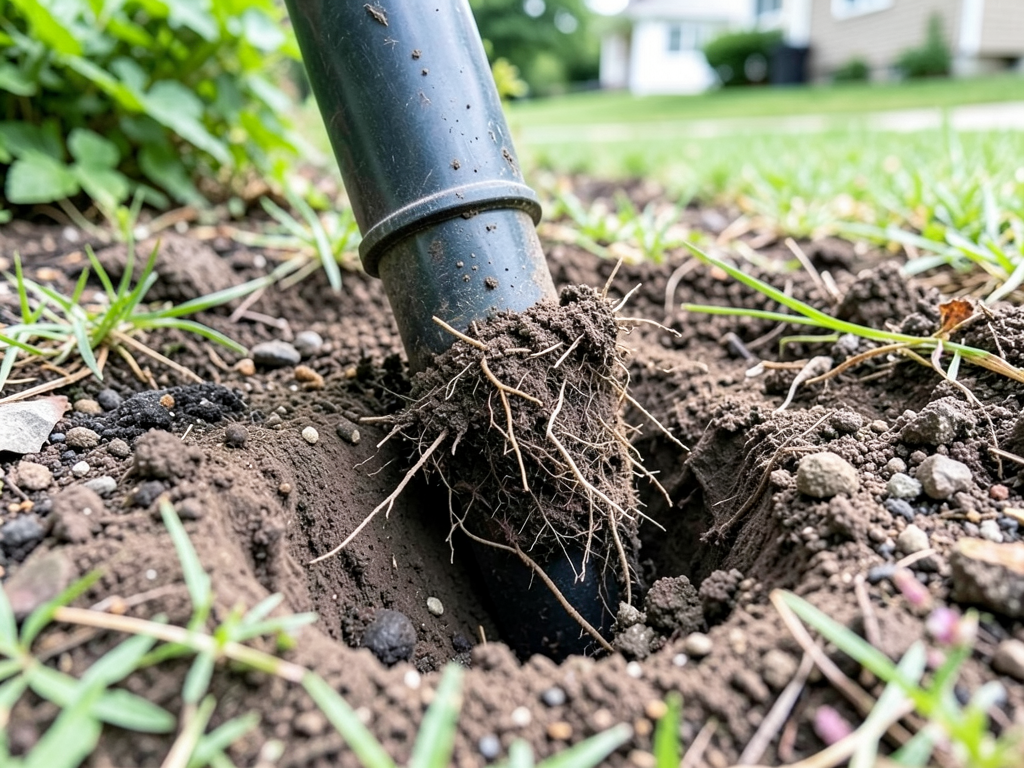
Why Your French Drain Failed and Flooded Your Harrington Grove Backyard
Standing water in your Harrington Grove yard after every rain isn’t just annoying—it’s a warning sign that your French drain has failed. In Raleigh’s heavy red clay soil, these drainage systems clog faster than most homeowners realize, sending water straight toward your foundation where it causes thousands in damage. How to Choose the Best Water Restoration Company in Cary Without Getting Ripped Off.
French drains work by channeling subsurface water away from your home through a perforated pipe buried in gravel. But when that pipe fills with silt, roots invade, or the slope reverses, the system backs up and creates the exact flooding problem it was designed to prevent. Harrington Grove properties, with their mature trees and dense clay soil, face these failures more often than newer developments. Who to Call for Emergency Water Damage in Downtown Raleigh at 3 AM.
The first 48 hours after a French drain failure are critical. Water that pools against your foundation seeps through hairline cracks, raising humidity in crawl spaces and basements. This moisture feeds mold growth, warps wood framing, and attracts termites—all while you’re still trying to figure out why your yard won’t drain. Water Damage Restoration Cary.
7 Warning Signs Your French Drain Has Failed
Before you call for help, knowing what failure looks like can save your home from extensive water damage. Here are the symptoms that indicate your French drain needs immediate attention:. Read more about Financing Your Water Damage Restoration When Insurance Does Not Cover the Whole Bill.
- Persistent yard puddles that remain 24-48 hours after rainfall
- Musty odors in your basement or crawl space
- White powdery deposits (efflorescence) on foundation walls
- Silt buildup at the drain’s exit point
- Foundation cracks appearing near the drainage area
- Water stains on basement walls after moderate rain
- Spongy lawn areas that never fully dry out
These symptoms often appear together because they share the same root cause: hydrostatic pressure building against your foundation when drainage fails. The pressure forces water through the smallest openings, turning your basement into a reservoir.
Why Raleigh’s Red Clay Soil Accelerates French Drain Failure
North Carolina’s famous red clay isn’t just difficult to garden in—it’s the primary reason French drains fail in the Triangle area. This soil type, technically called Cecil soil, has unique properties that spell disaster for subsurface drainage:
| Soil Characteristic | Impact on French Drains | Failure Timeline |
|---|---|---|
| High clay content (>40%) | Slows water infiltration, creates sediment | 2-3 years typical |
| Fine particle size | Clogs perforations rapidly | 1-2 years common |
| Low permeability | Forces water to surface instead of draining | Immediate during heavy rain |
The clay particles are so fine they pass through standard gravel backfill and accumulate directly in the pipe perforations. Once the holes clog, water has nowhere to go except back toward your house.
Harrington Grove’s mature tree canopy compounds this problem. Tree roots naturally seek out moisture and can grow into French drain pipes through even microscopic openings. A root the thickness of a pencil can completely block a 4-inch drain pipe within a single growing season.
The Hidden Cost of French Drain Failure
Most homeowners think a failed French drain means a wet yard. The reality is far more expensive. When water pools against your foundation, it creates hydrostatic pressure that can:. Read more about What Homeowners in King’s Grant Need to Know About Hydrostatic Pressure and Foundation Leaks.
- Force water through basement wall cracks
- Raise crawl space humidity above 70%, promoting mold
- Cause foundation settling and structural damage
- Create ideal conditions for wood-destroying organisms
The North Carolina Residential Code requires proper drainage away from all structures, but many older Harrington Grove homes were built before these standards existed. If your home predates 2012, your French drain may not meet current code requirements for slope, pipe sizing, or exit point placement.
According to the International Residential Code (IRC R405.1), surface and subsurface drainage must be directed away from foundations with a minimum 5% slope for at least 10 feet. A failed French drain violates this requirement and can void your homeowner’s insurance if water damage occurs. International Residential Code drainage requirements.
DIY French Drain Diagnostic Test
Before calling a professional, you can perform a simple test to check if your French drain is functioning. This diagnostic takes about 15 minutes and requires only a garden hose:
- Locate the drain exit point
Find where your French drain should discharge water, typically 10-20 feet from your foundation.
- Remove any visible debris
Clear leaves, grass, or sediment from the exit point to ensure water can flow freely.
- Run water for 5 minutes
Using a garden hose, run water at half pressure into the suspected drain location or cleanout.
- Check for flow
Water should flow steadily from the exit point. If flow is minimal or stops, the pipe is likely clogged.
- Inspect the exit water quality
Cloudy or muddy water indicates sediment buildup inside the pipe.
If water doesn’t flow or flows very slowly, your French drain has failed. This test won’t tell you the exact location of the blockage, but it confirms the system isn’t functioning properly.
Professional Solutions for Failed French Drains
When your French drain fails, you have two options: repair or replace. The right choice depends on the extent of the damage and your property’s specific conditions. EPA water management guidelines.
| Repair Option | Best For | Typical Cost Range | Lifespan Extension |
|---|---|---|---|
| Minor sediment buildup | $400-$800 | 2-3 years | |
| Spot pipe replacement | Localized root intrusion | $800-$1,500 | 5-7 years |
| Full system replacement | Extensive damage or code violations | $2,500-$6,000 | 15-20 years |
Camera inspection technology has revolutionized French drain diagnostics. A fiber-optic camera can travel through your drain pipe, identifying exact blockage locations, pipe damage, and even root intrusion patterns. This technology eliminates the guesswork and ensures repairs target the actual problem areas.
For Harrington Grove properties, we often recommend full replacement rather than repair. The combination of mature trees, dense clay soil, and older construction means partial repairs frequently fail within a year or two.
Preventing Future French Drain Failures
Once your French drain is functioning again, preventing future failures requires understanding what caused the original problem. Here are evidence-based strategies that work in Raleigh’s climate:
- Install a silt barrier using geotextile fabric around the pipe
- Increase gravel size to 1.5-2 inches for better filtration
- Add cleanouts every 50 feet for maintenance access
- Grade properly to maintain positive flow away from house
- Consider a curtain drain for properties with severe slope issues
The EPA recommends proper site drainage as a primary method for preventing foundation moisture problems. Their guidelines emphasize that water management starts at the surface and works downward, not the other way around.
Harrington Grove residents should also consider the seasonal factors unique to our area. Hurricane season runoff can overwhelm undersized French drains, while winter freezes can cause soil expansion that damages pipes. A properly designed system accounts for these extreme weather events.
Why Quick Action Matters
French drain failure isn’t just a landscaping inconvenience—it’s a structural threat that escalates quickly. Here’s what happens when you delay repairs:
| Timeline | Damage Progression | Repair Complexity |
|---|---|---|
| Days 1-7 | Surface water pooling, minor foundation moisture | Simple cleaning or spot repair |
| Weeks 2-4 | Crawl space humidity rises, mold begins | System cleaning plus mold remediation |
| Months 2-6 | Foundation cracks appear, wood rot starts | Full replacement plus structural repairs |
| 6+ months | Major structural damage, potential collapse risk | Complete reconstruction needed |
The cost difference between addressing a failed French drain in week one versus month six can exceed 500%. What starts as a $800 cleaning job becomes a $15,000 foundation repair project.
Local Expertise Makes the Difference
Harrington Grove’s specific challenges require local knowledge. Our team understands the neighborhood’s unique characteristics: Local Experts for Mold Remediation and Water Damage in Five Points.
- Mature oak and pine root systems common to the area
- Red clay soil composition throughout the development
- Older homes with outdated drainage systems
- Specific grading patterns that affect water flow
We’ve restored drainage for properties near Harrington Grove Country Club and throughout the 27614 zip code area. This local experience means we can diagnose problems faster and recommend solutions that actually work in your specific conditions.
Our diagnostic process includes moisture mapping of your foundation, soil analysis, and evaluation of your property’s unique drainage patterns. We don’t just fix the immediate problem—we prevent future failures by addressing the underlying causes.
Emergency Response Available
Water damage waits for no one. When your French drain fails during a storm, every hour of delay increases the damage to your home. Our emergency response team is available 24/7 for Harrington Grove residents experiencing active water intrusion.
We arrive within 60 minutes of your call, equipped with industrial-grade water extraction equipment, moisture meters, and the expertise to stop the damage immediately. Don’t wait until Monday morning—call now if you’re experiencing active flooding.
Call (984) 294-5900 today to schedule your inspection. Our certified technicians will evaluate your French drain system, identify failure points, and provide a clear plan for restoration. Whether you need emergency service or want to prevent future problems, we’re here to help Harrington Grove homeowners protect their most valuable investment.
Frequently Asked Questions
How long should a French drain last in Raleigh’s climate?
With proper installation and maintenance, a French drain should last 15-20 years in Raleigh’s red clay soil. However, without proper filtration and cleanouts, many systems fail within 5-7 years due to sediment buildup and root intrusion.
Can I clean my own French drain?
You can attempt to clear minor surface blockages, but deep cleaning requires specialized equipment like hydro-jetters that most homeowners don’t own. DIY attempts often push debris further into the pipe, making the problem worse.
Will homeowners insurance cover French drain failure?
Standard policies typically don’t cover drainage system failures unless caused by a sudden, accidental event like a tree falling on the pipe. Gradual failure due to soil conditions or age is considered a maintenance issue and isn’t covered.
How much does French drain replacement cost in Harrington Grove?
Replacement costs vary based on linear footage and soil conditions, but most Harrington Grove properties require $2,500-$6,000 for a complete system replacement with proper filtration and cleanouts.
What’s the difference between a French drain and a curtain drain?
A French drain handles subsurface water while a curtain drain intercepts surface runoff before it reaches your foundation. Properties with severe slope issues often need both systems working together.
You may also find this helpful. Why In-Place Drying Is Better Than Total Demolition for Your Harrington Grove Living Room.