Menu

Emergency Dehumidifier Rental in Raleigh – Industrial Units Deployed in Under 90 Minutes

When water floods your property in Raleigh, every minute counts. We deliver commercial-grade dehumidifiers and commercial drying equipment rental to your location fast, stopping mold growth and structural damage before they spread.

Slider Image 1
Slider Image 2
Slider Image 3
Slider Image 4
Slider Image 5
Slider Image 7
Slider Image 8
Slider Image 9
Slider Image 10
Slider Image 11

Why Water Damage in Raleigh Demands Immediate Industrial Dehumidification

Raleigh sits in the humid subtropical climate zone. Average humidity hovers between 70 and 85 percent year-round. When your basement floods from a burst pipe or storm surge, that ambient moisture accelerates mold colonization. You have 24 to 48 hours before fungal spores embed in drywall, subflooring, and HVAC ductwork.

Standard box-store dehumidifiers pull 30 to 50 pints per day. A flooded 1,200-square-foot basement holds thousands of gallons of absorbed water in concrete, insulation, and framing lumber. You need an industrial dehumidifier for rent that extracts 150 to 300 pints daily, paired with air movers that cycle 3,000 cubic feet per minute.

Raleigh's red clay soil compounds the problem. Clay expands when wet and contracts when dry. A crawlspace flood saturates the clay under your foundation slab. Without aggressive commercial dehumidifier rental equipment, that moisture wicks upward through capillary action, feeding hidden mold behind baseboards and inside wall cavities.

Homeowners who wait 72 hours face remediation bills three times higher than those who act in the first 12 hours. Delay also triggers insurance claim disputes. Carriers classify neglect differently than prompt mitigation. A 24 hour dehumidifier rental deployed immediately proves you took reasonable steps to minimize loss.

Flood dehumidifier rental equipment works fastest when paired with moisture mapping. Thermal imaging identifies wet zones invisible to the naked eye. Targeting those pockets with focused airflow and dehumidification prevents secondary damage that shows up weeks later as buckled hardwood or peeling paint.

Why Water Damage in Raleigh Demands Immediate Industrial Dehumidification
How Professional-Grade Dehumidification Stops Damage Progression

How Professional-Grade Dehumidification Stops Damage Progression

We deploy refrigerant or desiccant dehumidifiers based on your specific conditions. Refrigerant units work best in temperatures above 60 degrees and relative humidity above 40 percent. Desiccant units excel in crawlspaces and winter floods where temperatures drop below 50 degrees. Choosing the wrong type wastes days.

Our commercial drying equipment rental includes low-grain refrigerant (LGR) dehumidifiers. LGR technology drops humidity to 10 percent relative humidity, creating a vapor pressure differential that pulls moisture from porous materials. Standard units stall at 30 percent RH, leaving structural lumber at 18 percent moisture content. That level still supports mold growth.

We calculate grain depression, not just relative humidity. Grain depression measures the actual water removal capacity in grains per pound of air. An LGR unit achieves 90 grains per pound depression. This metric determines how fast we dry out your subfloor and wall studs, which matters more than the percentage on a hygrometer.

Air movement is half the equation. We position axial air movers in a circular pattern to create controlled evaporation. The airflow lifts moisture from surfaces into the air stream, where the dehumidifier captures it. Without proper air movement, you create humidity pockets that turn into mold farms.

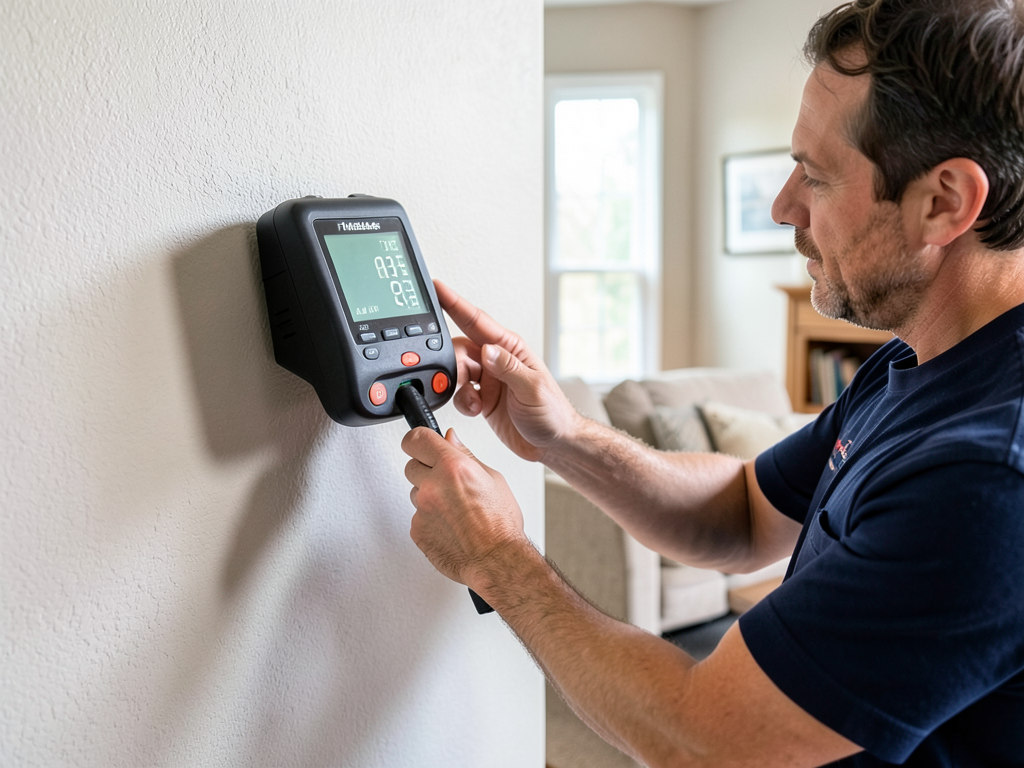
We monitor drying progress with moisture meters and thermal cameras. Gypsum drywall should read below 12 percent moisture content. Structural lumber targets 15 percent or lower. Concrete slabs need three to five pounds per 1,000 square feet on a calcium chloride test. We do not pull equipment until every reading hits safe thresholds. Guessing costs you money in callbacks and mold remediation.

What Happens When You Call for Emergency Dehumidifier Rental

Emergency Dehumidifier Rental in Raleigh – Industrial Units Deployed in Under 90 Minutes
01

Immediate Dispatch and Assessment

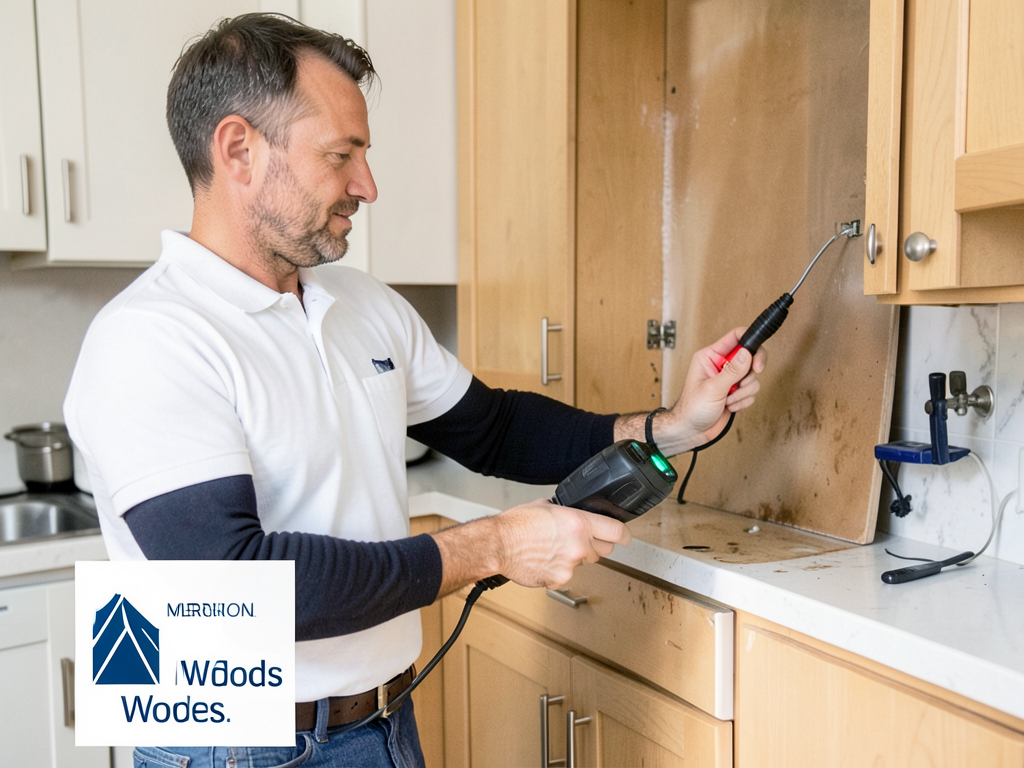
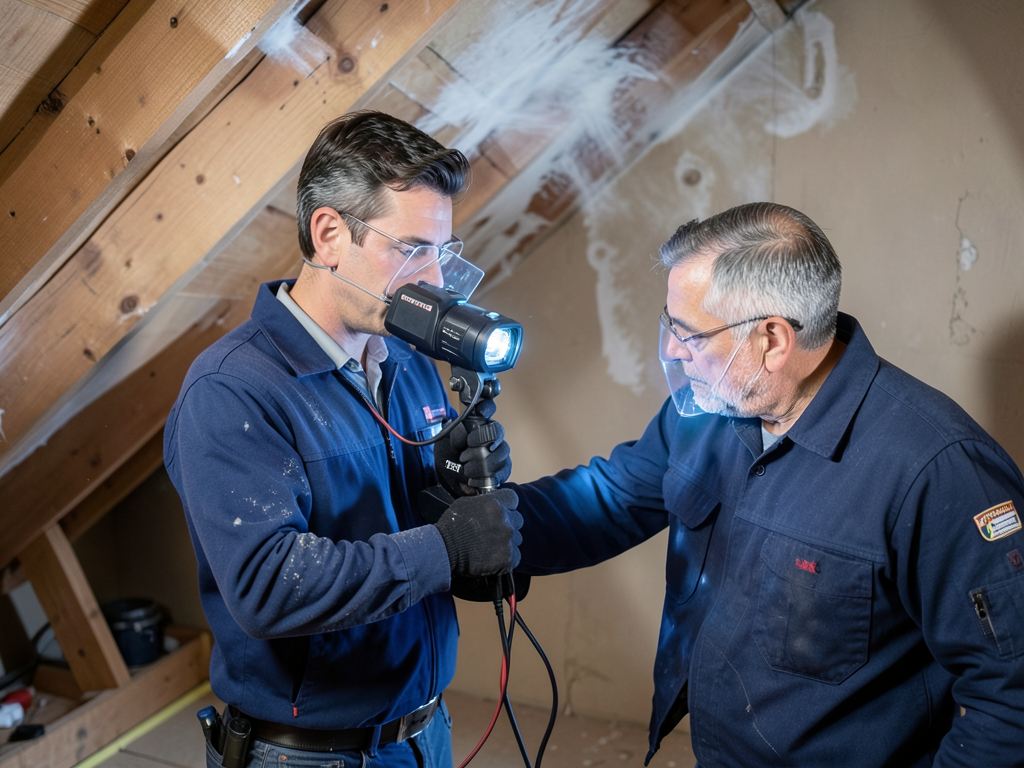
You call our emergency line at (984) 294-5900. We dispatch a technician with industrial dehumidifier equipment within 90 minutes. The technician arrives with moisture detection tools, maps the affected area using thermal imaging and pin-type moisture meters, and calculates the required dehumidification capacity based on square footage, water source, and material saturation levels. You receive a site-specific drying plan before equipment deployment begins.
02

Equipment Deployment and Staging

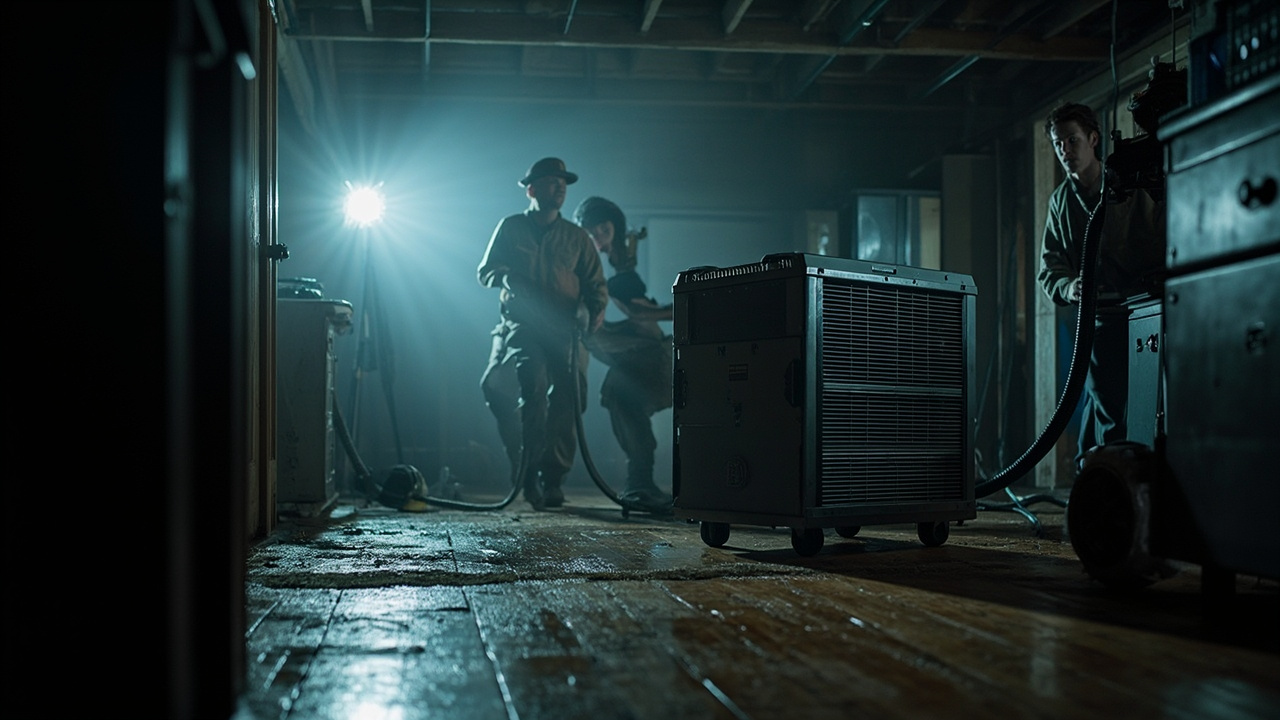
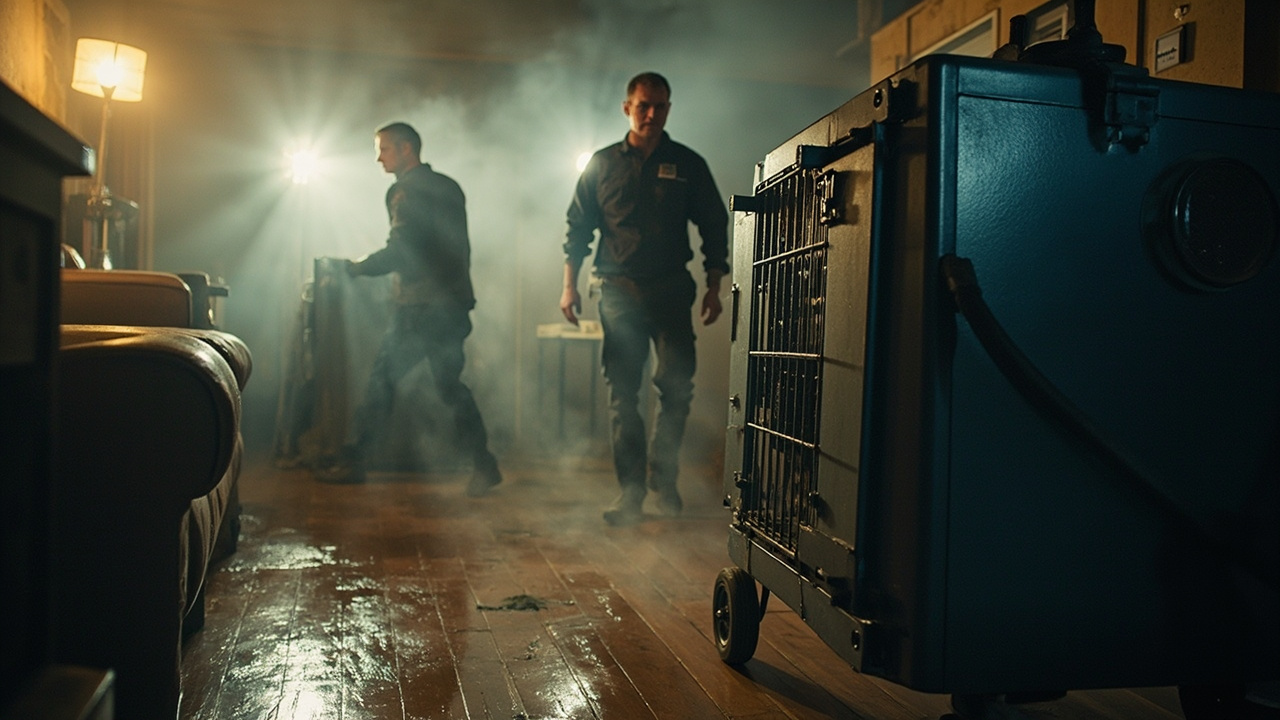
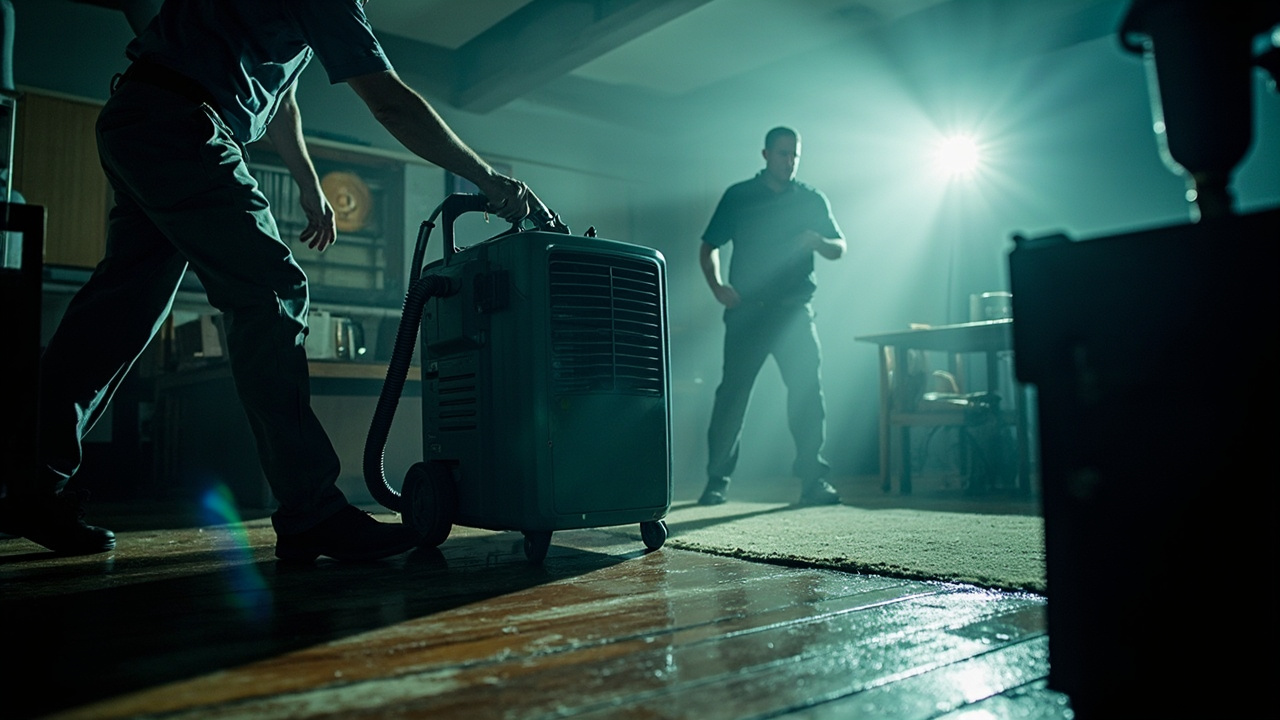
We position commercial dehumidifiers and air movers based on airflow dynamics and moisture concentration zones. Dehumidifiers go in central locations with clear intake and exhaust paths. Air movers create a circulation loop that moves humid air toward the dehumidifier while directing dry air back across wet surfaces. We seal off unaffected areas to prevent humidity migration and maximize drying efficiency in the damaged zone.
03

Monitoring and Equipment Removal

Our team checks moisture readings every 24 hours. We adjust equipment placement and airflow patterns based on drying progress. When moisture meters confirm all materials have reached safe thresholds, we remove the equipment and provide a final moisture report for your insurance claim. You get documentation showing the drying timeline, equipment used, and final moisture content readings that prove complete mitigation.

Why Raleigh Properties Need Local Water Damage Expertise

Raleigh enforces the 2018 North Carolina Building Code, which requires vapor barriers in crawlspaces and specific insulation R-values. A water damage restoration team unfamiliar with these requirements might tear out materials unnecessarily or miss code violations that delay your insurance payout. We document existing code compliance and integrate it into the drying plan.

Many Raleigh homes built before 1990 sit on pier-and-beam foundations with ventilated crawlspaces. These designs were standard before modern building science understood moisture dynamics. When groundwater floods a ventilated crawlspace, the outdoor humidity feeds moisture back into the space faster than a dehumidifier can remove it. We temporarily seal foundation vents during the drying process, then restore ventilation once equilibrium moisture content is achieved.

Neighborhoods near Crabtree Creek and Walnut Creek face flood risk during hurricane season. These waterways overflow when tropical systems stall over the Triangle region, dumping 10 to 15 inches in 48 hours. Floodwater carries silt, bacteria, and organic debris. Drying this contamination requires antimicrobial treatment paired with dehumidification. We treat category 3 water differently than a clean supply line break because the health risks and material disposal requirements differ.

Silverline Water Damage Restoration Raleigh operates 24 hour dehumidifier rental services year-round. We stock equipment locally, which means no wait times for shipments from regional hubs. When a freeze event ruptures pipes across hundreds of properties simultaneously, response time determines who gets help first. Local inventory gives you the advantage.

We also understand Raleigh's insurance landscape. Many policies require specific mitigation steps within 24 hours to maintain full coverage. We provide real-time documentation and moisture logs that satisfy adjuster requirements, reducing claim disputes and payout delays.

What to Expect During Emergency Dehumidifier Rental Service

Response Time and Availability

We answer emergency calls 24 hours a day, 365 days a year. A live technician answers the phone, not an answering service. You receive a dispatch confirmation within 15 minutes and equipment arrival within 90 minutes for Raleigh addresses. Our trucks carry industrial dehumidifiers, air movers, moisture meters, and thermal cameras so we start mitigation immediately. No return trips for forgotten equipment. No waiting until the next business day. When water invades your property at 2 a.m. on a Sunday, we respond the same as a Tuesday afternoon.

Initial Evaluation and Moisture Mapping

The technician performs a room-by-room moisture assessment using penetrating and non-penetrating meters. Thermal imaging reveals hidden moisture in wall cavities and under flooring without demolition. We test humidity levels at multiple heights because stratification creates microclimates. You receive a written moisture map showing affected areas, saturation levels, and recommended equipment placement. This documentation supports your insurance claim and establishes baseline readings for tracking drying progress. We photograph all findings and time-stamp the images for adjuster review.

Drying Results and Material Preservation

Aggressive dehumidification saves materials that would otherwise require replacement. Hardwood floors dry without cupping if treated within 48 hours. Drywall remains structurally sound when moisture content drops below 12 percent before mold growth begins. We target specific moisture thresholds for each material type. You avoid unnecessary demolition and reconstruction costs. The final result is a property restored to pre-loss moisture levels with documented proof that supports insurance reimbursement. We provide a completion certificate showing final moisture readings and equipment runtime logs.

Ongoing Monitoring and Support

We check drying progress daily and adjust equipment as needed. You receive text or email updates with current moisture readings and estimated completion dates. If drying stalls, we identify the cause and modify the approach. After equipment removal, we offer a 30-day moisture recheck to confirm no rebound humidity. This follow-up catches hidden pockets that dried slowly or secondary moisture sources like roof leaks. You also get our direct line for questions during reconstruction. Many contractors encounter unexpected moisture issues during rebuild. We provide guidance at no additional cost to keep your project on track.

Frequently Asked Questions

You Have Questions,
We Have Answers

Is it possible to rent a dehumidifier? +

Yes. You can rent commercial-grade dehumidifiers from water damage restoration companies, equipment rental centers, and some hardware stores in Raleigh. These units pull moisture faster than consumer models, which matters when you need to stop mold growth within 24-48 hours of water damage. Professional restoration companies often include dehumidifier rental in emergency service packages and monitor moisture levels daily. Rental costs vary by unit size and rental duration. If you have active water damage, call a restoration specialist immediately. They will assess the situation and deploy the right equipment to dry your space before structural damage worsens.

What can I use instead of a dehumidifier? +

Nothing replaces a dehumidifier for serious water damage. Fans increase airflow but do not remove moisture from the air. Opening windows works only if outdoor humidity is lower than indoor levels, which rarely happens during Raleigh's humid summers. Desiccants like silica gel or calcium chloride absorb minimal moisture and cannot handle flooded rooms or burst pipes. If you are dealing with emergency water intrusion, stop trying DIY solutions. You need professional extraction and dehumidification within hours to prevent mold colonization and structural rot. Delaying proper drying equipment turns a manageable problem into a total loss insurance claim.

Is it worth renting a dehumidifier? +

Absolutely. Professional dehumidifiers remove 100-200 pints of water daily, compared to 30-50 pints for consumer units. After a flood, leak, or sewage backup, you need industrial capacity to dry structural materials before mold takes hold. Rental costs are minor compared to replacing drywall, flooring, and personal belongings destroyed by prolonged moisture exposure. In Raleigh's humid climate, standard ventilation will not dry saturated spaces fast enough. Renting gives you commercial power without buying equipment you will only use once. If your insurance covers water damage, dehumidifier rental is typically a covered expense. Speed determines whether you save your home or gut it.

Can I rent a dehumidifier at Home Depot? +

Home Depot rents consumer-grade dehumidifiers at some locations, but availability varies by store. Check your local Raleigh Home Depot for current inventory and pricing. These units work for minor moisture issues but lack the capacity needed for emergency water damage. If you have standing water, saturated drywall, or flooded crawlspaces, you need commercial extraction equipment and high-capacity dehumidifiers that most big-box stores do not stock. Call ahead to confirm availability and specifications. For active water emergencies, contact a restoration company that deploys professional equipment immediately and monitors drying progress daily. Time matters more than saving rental fees.

Will mold grow in 60% humidity? +

Yes. Mold spores germinate and grow at humidity levels above 55-60%. At 60% relative humidity, porous materials like drywall, insulation, and wood remain damp enough to support mold colonies within 24-72 hours. Raleigh's naturally high humidity makes indoor moisture control critical after any water intrusion. You need to reduce humidity below 50% and dry structural materials to under 15% moisture content to stop microbial growth. Use a professional moisture meter to verify drying, not guesswork. If you detect musty odors or see discoloration on walls and ceilings, mold is already colonizing. Act within hours, not days.

Does Home Depot rent wet dry vacs? +

Yes. Home Depot rents wet dry vacuums at most locations for extracting standing water from floors and carpets. These help with initial water removal but do not replace professional extraction equipment. For emergencies involving sewage, contaminated floodwater, or significant water volume, you need truck-mounted extractors and antimicrobial treatments that rental vacuums cannot provide. Wet dry vacs also do nothing for hidden moisture in wall cavities, subfloors, or insulation. If you are handling clean water from a minor leak, a rental vacuum works. For anything involving Category 2 or 3 water, call a restoration company immediately. Cross-contamination risks are serious.

How to dry out a room without a dehumidifier? +

You cannot dry a water-damaged room effectively without mechanical dehumidification. Opening windows only works if outdoor air is drier, which is rare in Raleigh during spring and summer. Fans move air but do not extract moisture from saturated materials. Towels and mops remove surface water but leave structural components soaked. You need equipment that pulls water vapor from the air and materials simultaneously. After water damage, humidity levels inside walls and subfloors remain dangerously high even when surfaces feel dry. If you skip dehumidification, expect mold growth, wood rot, and eventual structural failure. This is not a DIY situation.

How to make a makeshift dehumidifier? +

Do not. Makeshift dehumidifiers using rock salt, baking soda, or buckets of desiccant cannot handle emergency water damage. These absorb ounces of moisture when you need to remove gallons. After a pipe burst, roof leak, or flooding, structural materials hold hundreds of pounds of water. Only commercial dehumidifiers generate the airflow and extraction capacity to dry building components before mold colonizes. Attempting DIY solutions wastes the critical 24-48 hour window when professional intervention prevents total loss. If cost concerns are stopping you, call your insurance company first. Most policies cover professional drying equipment and services for covered water damage events.

How to draw moisture out of a room? +

Professional dehumidifiers and air movers create negative pressure that pulls moisture from walls, floors, and furnishings. You need both equipment types working together. Dehumidifiers extract water vapor from the air. Air movers accelerate evaporation from wet surfaces and materials. Position air movers to direct airflow across saturated areas, then let dehumidifiers capture the moisture. Monitor progress with moisture meters, not visual inspection. Materials feel dry to the touch long before they reach safe moisture content levels. In Raleigh's humid climate, natural drying takes weeks and guarantees mold growth. Deploy equipment within hours of water intrusion for best results.

Is 70% humidity too high for a house? +

Yes. Indoor humidity above 60% promotes mold growth, dust mites, and structural damage. Ideal indoor humidity ranges from 30-50%. At 70%, you create perfect conditions for microbial colonization on organic materials like drywall, wood framing, and insulation. Raleigh's naturally high outdoor humidity makes controlling indoor levels challenging, especially after water damage. If your home measures 70% humidity, you likely have hidden moisture problems in crawlspaces, attics, or wall cavities. Use a hygrometer to measure levels in multiple rooms. If readings stay elevated despite running HVAC, you need professional moisture assessment to locate the source before structural damage worsens.

How Raleigh's Humidity and Clay Soil Amplify Flood Damage Risks

Raleigh averages 220 days per year with relative humidity above 60 percent. This ambient moisture means flooded materials never fully air-dry on their own. The outdoor air feeding into your property carries enough water vapor to maintain mold-friendly conditions indefinitely. Commercial dehumidifier rental equipment creates an artificial low-humidity environment that overcomes this natural disadvantage. The clay soil underlying most Raleigh foundations absorbs floodwater like a sponge and releases it slowly over weeks. Without industrial dehumidifier for rent units running continuously, that ground moisture migrates upward through concrete slabs and pier footings, rehydrating materials you thought were dry.

Raleigh's building stock includes thousands of homes built during the 1970s and 1980s construction boom. These properties often lack modern moisture barriers and have outdated HVAC systems that cannot handle dehumidification loads after a flood. Local water damage specialists understand which construction methods were common in each decade and how those design choices affect drying strategies. Silverline Water Damage Restoration Raleigh has worked on properties in Historic Oakwood, North Hills, and Brier Creek. We know the difference between drying a mid-century ranch and a new-construction townhome. That local knowledge prevents costly mistakes and speeds up the mitigation process.
Water Damage Restoration Services in The Raleigh Area

While based in Raleigh, Silverline proudly serves the surrounding areas, providing expert water damage restoration wherever you are. Our interactive map allows you to visualize our service radius and plan your visit, or simply understand our immediate response capabilities. We are dedicated to reaching you quickly, ensuring prompt and efficient service for your home or business, no matter your precise location within our service area, ready to assist.

Address:
Silverline Water Damage Restoration Raleigh, 306 E Hargett St, Raleigh, NC, 27601

Additional Services We Offer

Our news updates

Latest Articles & News from The Blogs

Saving Your Custom Bathroom Vanity From Water Damage in a Stonehenge Remodel Water damage to your custom bathroom vanity can…

Saving Your Custom Bathroom Vanity From Water Damage in a Stonehenge Remodel

Saving Your Custom Bathroom Vanity From Water Damage in a Stonehenge Remodel Water damage to your custom bathroom vanity can…

Comparing Low-VOC and Green Restoration Methods for Your Caraleigh Nursery

Comparing Low-VOC and Green Restoration Methods for Your Caraleigh Nursery When water damage strikes your Caraleigh nursery, the last thing…

What Homeowners in King’s Grant Need to Know About Hydrostatic Pressure and Foundation Leaks

What Homeowners in King’s Grant Need to Know About Hydrostatic Pressure and Foundation Leaks Water seeping into your basement through…

Contact Us

Call (984) 294-5900 right now for emergency dehumidifier rental in Raleigh. We deploy industrial drying equipment in under 90 minutes and start protecting your property before mold takes hold. Do not wait for the damage to worsen.